HiAce Space Cabin

Camper conversion system for the Toyota HiAce

Although I have worked with many clients before in furniture and even developed my own individual product, this was my first official freelance project. It involved both design a product and helping a customer develop a manufacturing solution for that product.

Type : Interior camper system build

Production Method : CNC Router, cabinetry construction

Scale : 30 units sold (Local manufacturing)

Skills used: Prototyping, CAD Design, Cabinetry

Other Skills: Research, costing

Project Start

The Toyota Hiace is a compact 4wd diesel van that has only recently been available in the US due to 25 year import laws. One of the leaders of this JDM off-road van boom is Danny, the owner at Vanlife Northwest. He imports these 90’s vans from Japan, then completely revives the 30 year old vehicles and upgrades them to take on all the terrain the West Coast has to offer. The largest problem Danny has run into; he completely restored these vans mechanically, but building out the interior of the van to a fully functional camper was left for the customer to tackle. 

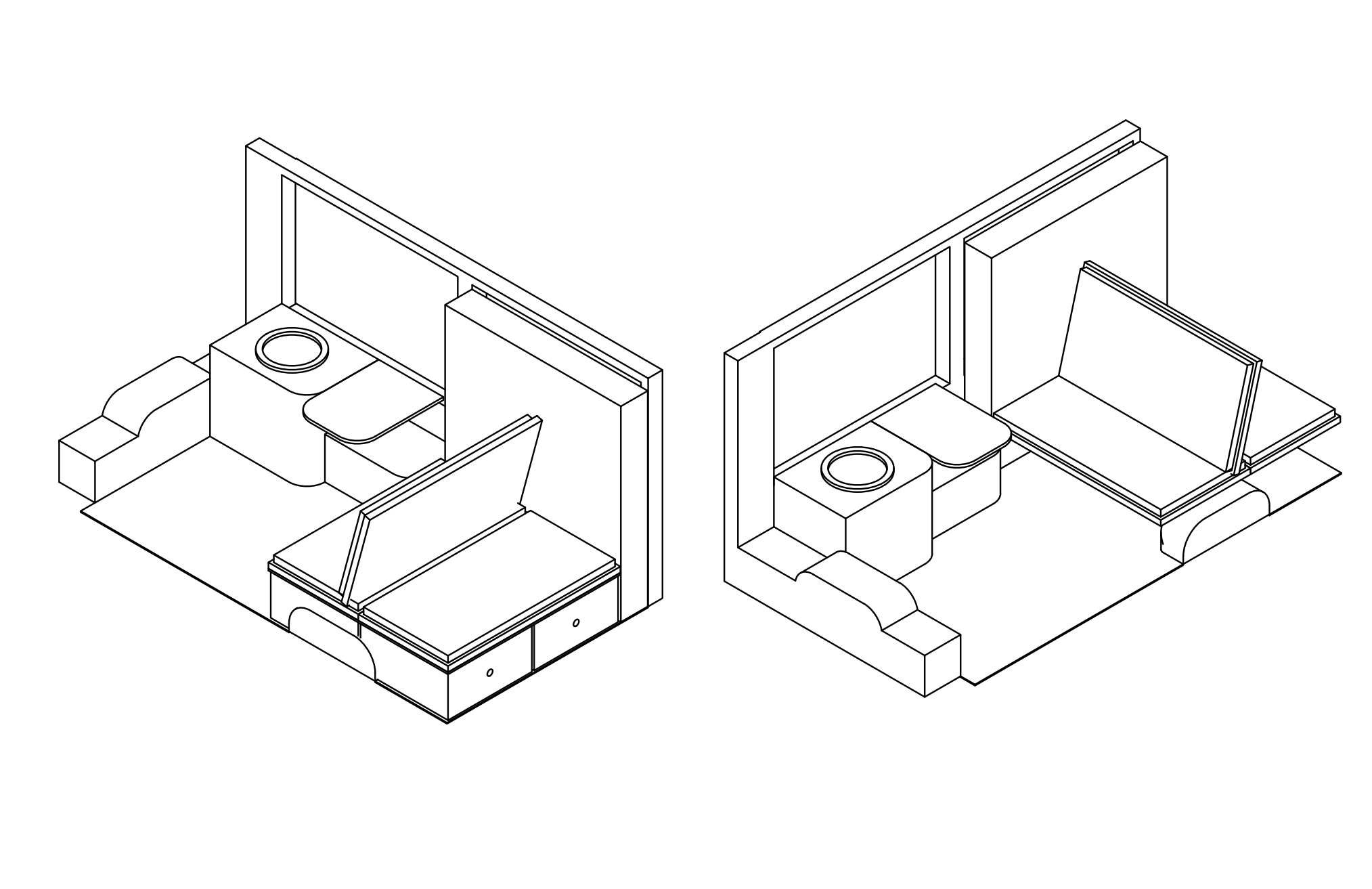
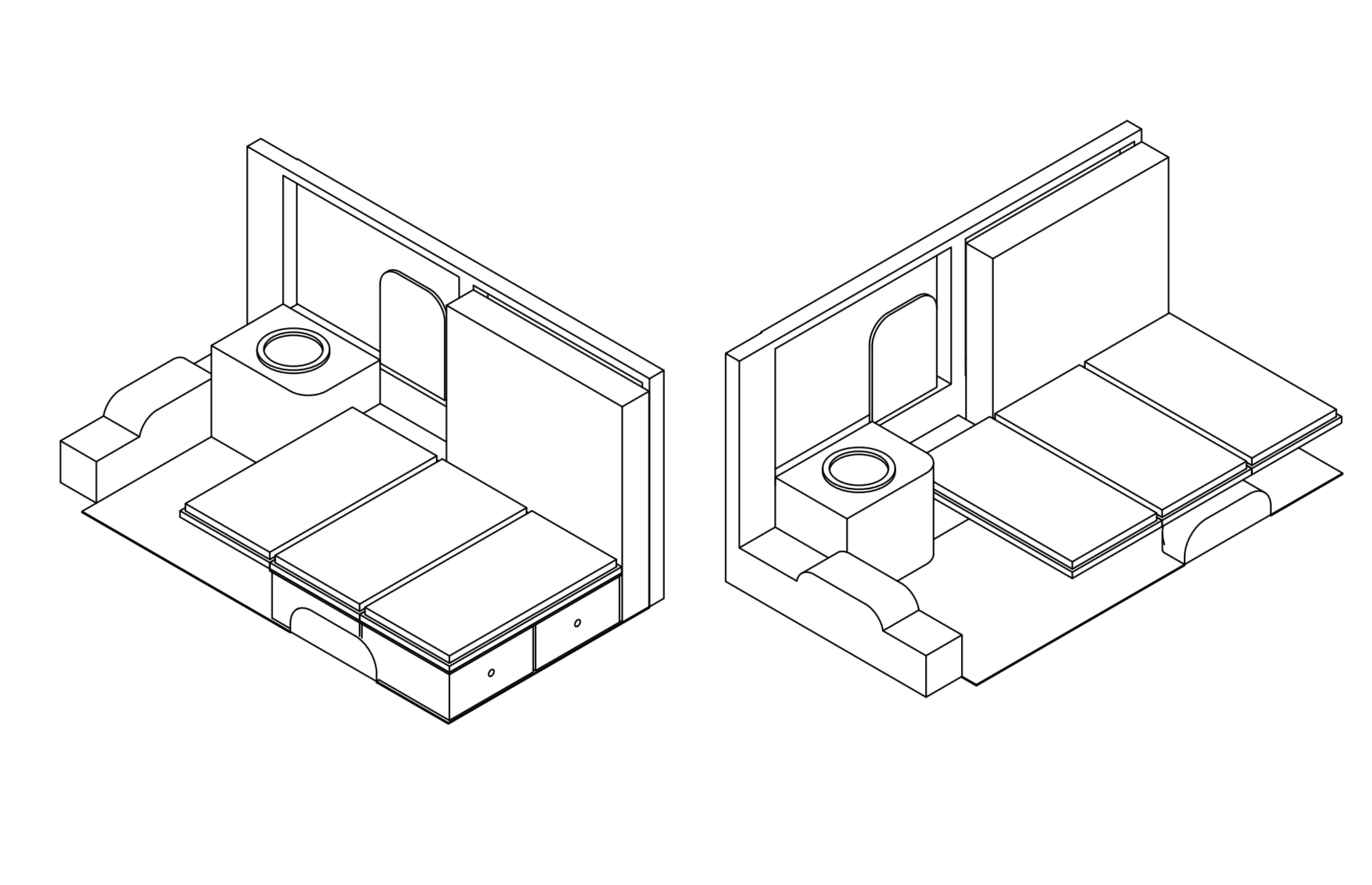
One of those super special and specific projects that only the PNW has to offer, I was lucky enough to connect with Danny and was given the task of creating an efficient camper solution for these very unique vans. The first step was to get rough sketches and layouts of the van build. I took the rough measurements of the interior and began blocking in layouts until we found a layout we wanted to move forward with.
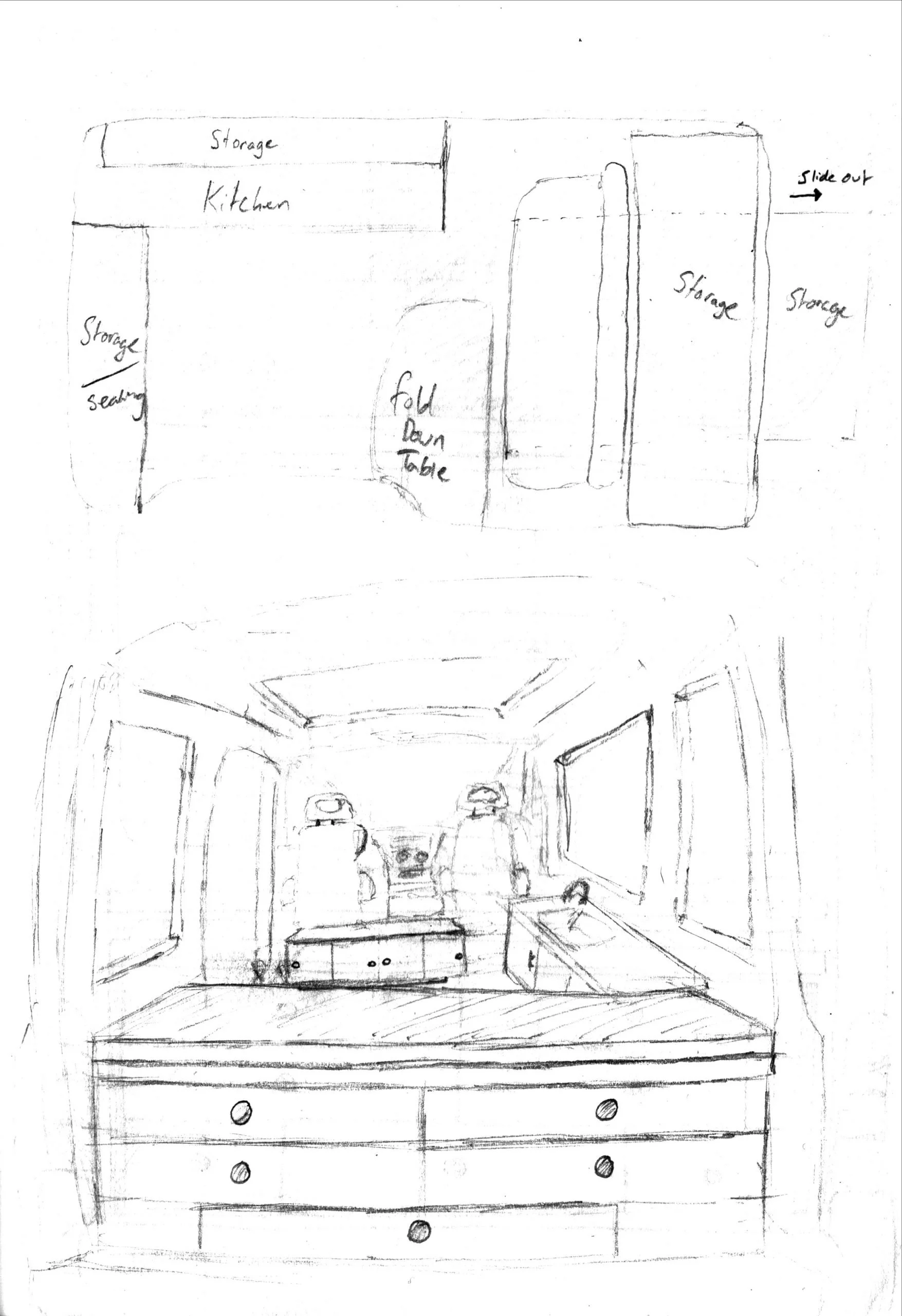
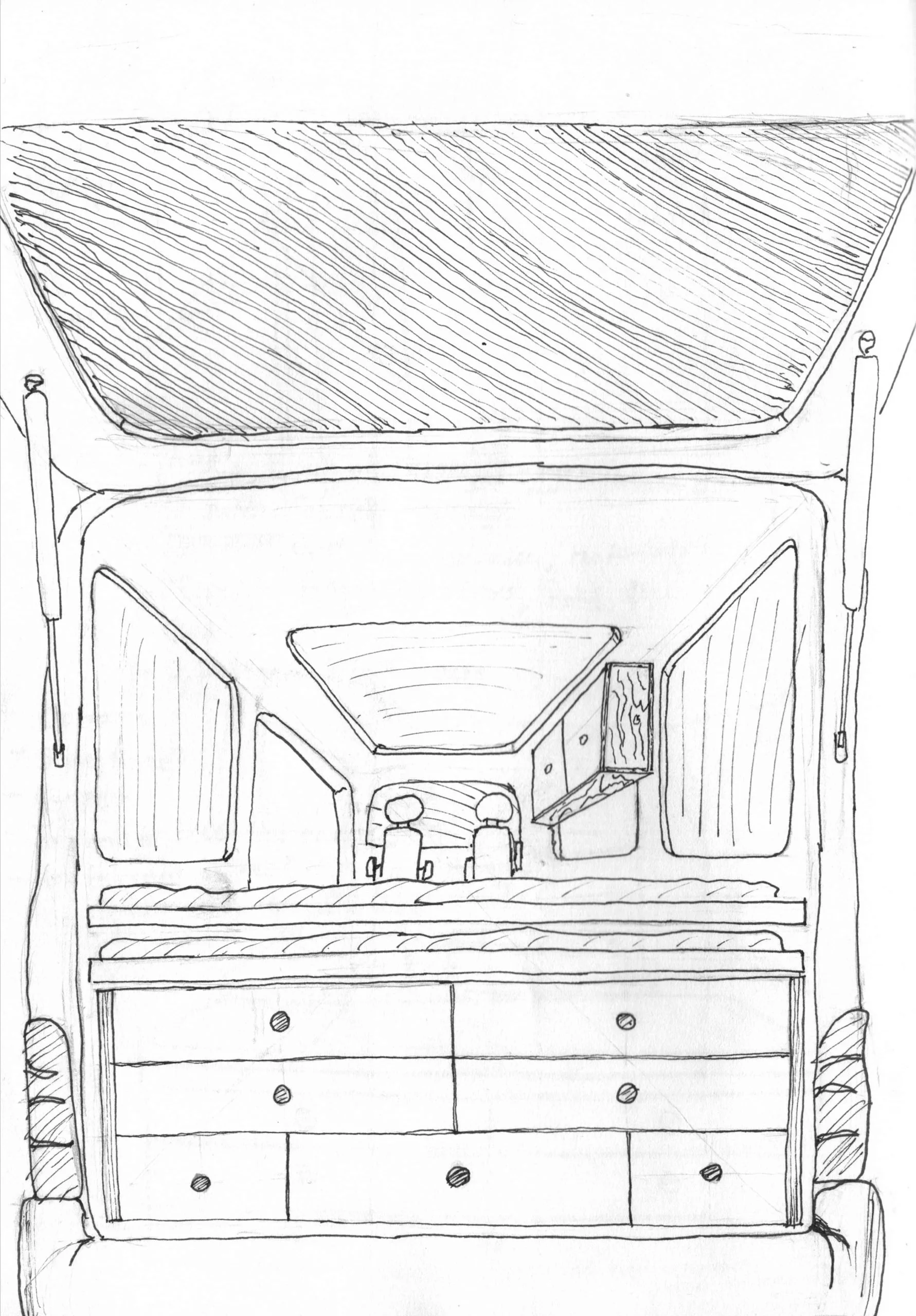
Hand-drawn sketch of a van interior, including a storage closet, kitchen, and fold-down table, with an additional storage space and slide-out feature noted.
Line drawing of a wooden van build out
Line drawing of a van build out
arrow

Initial design

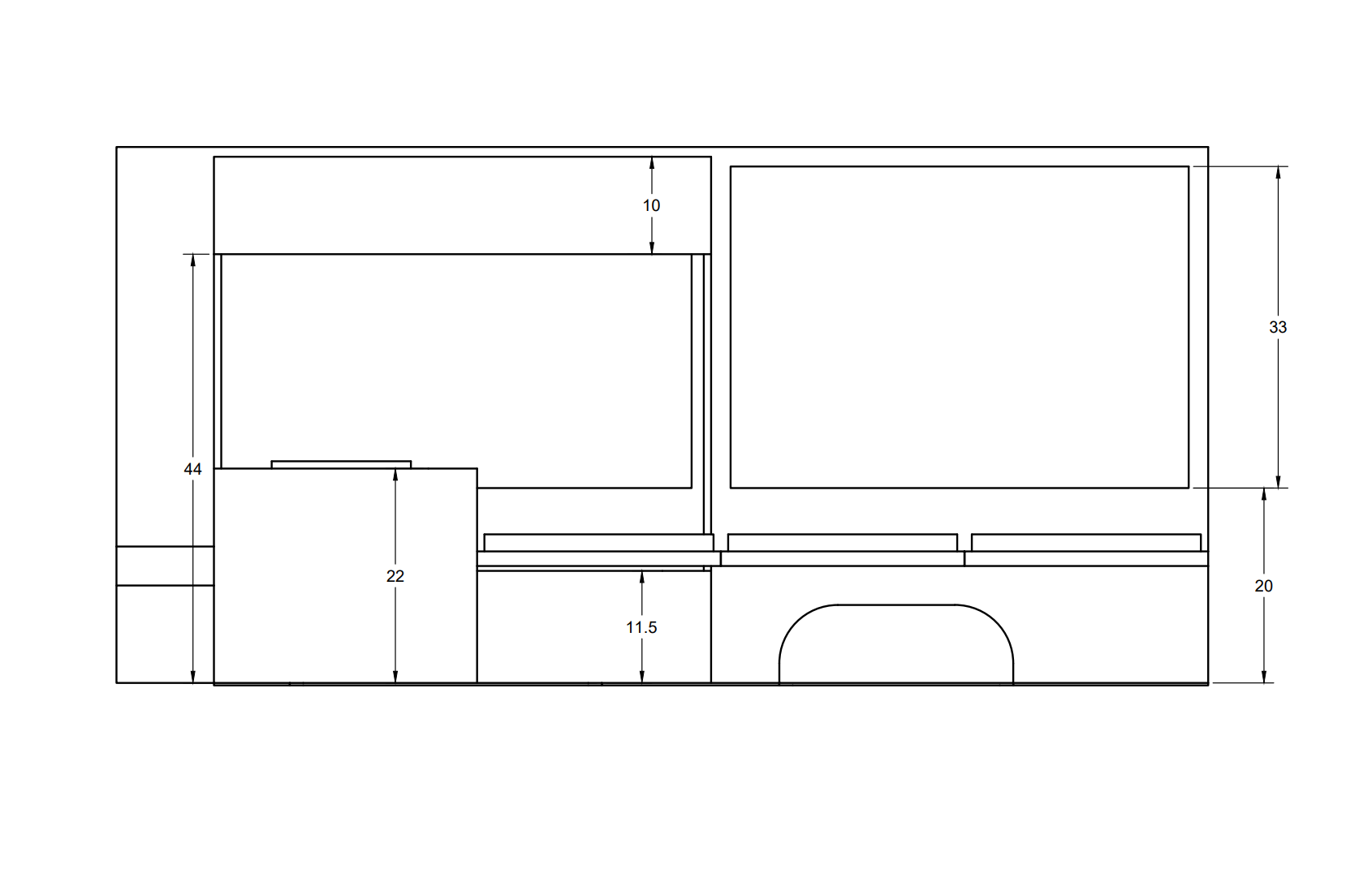
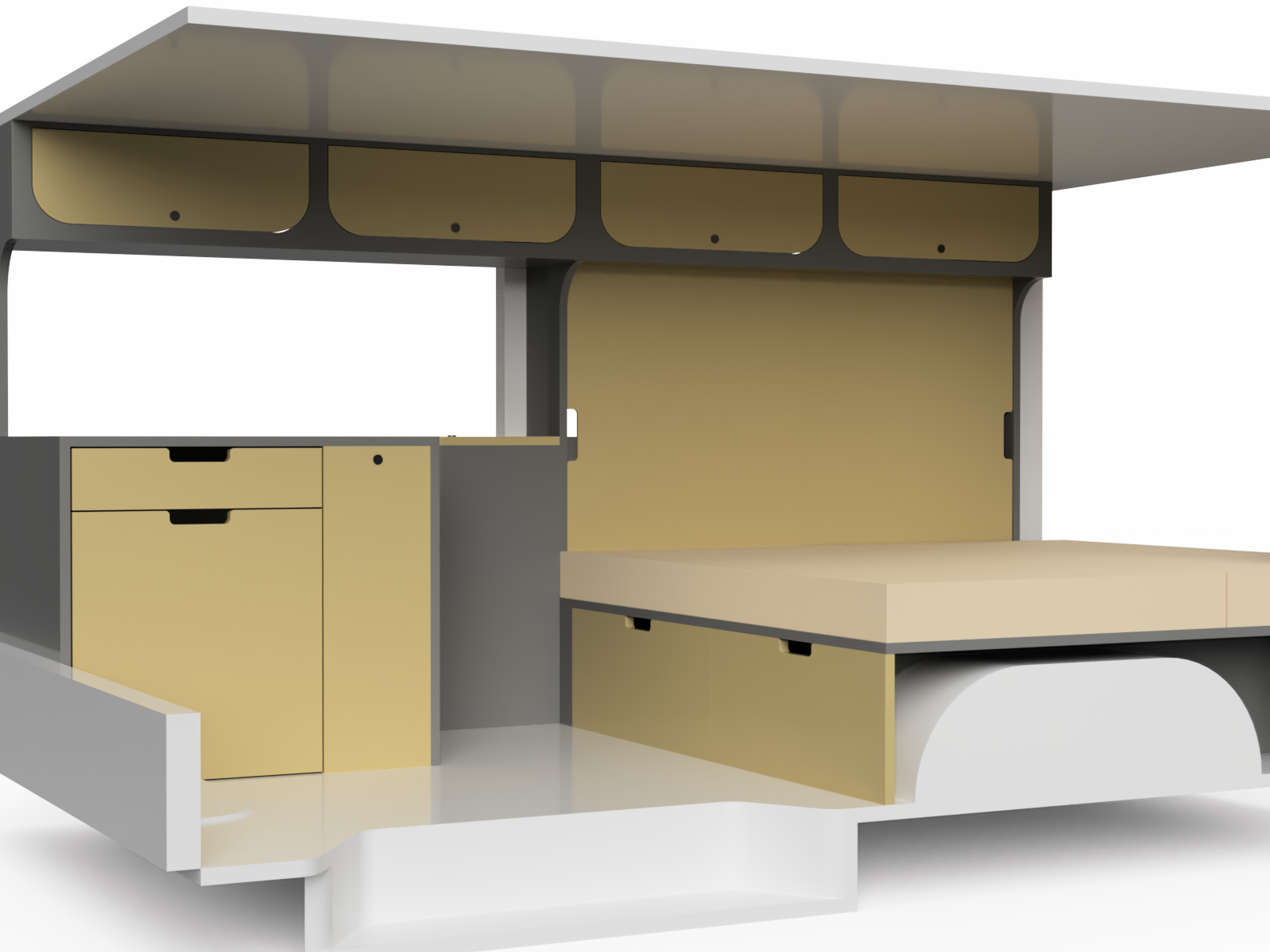
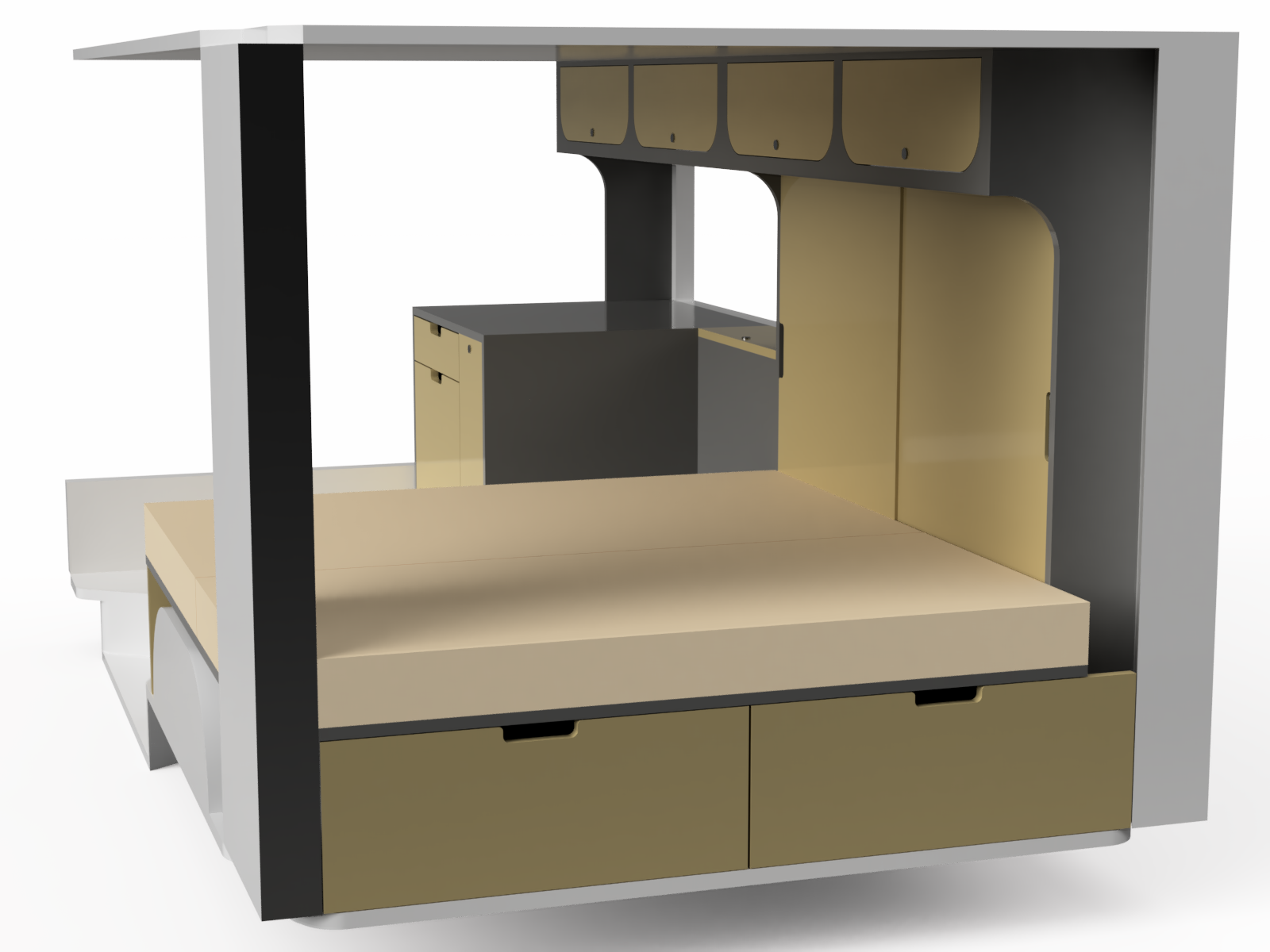
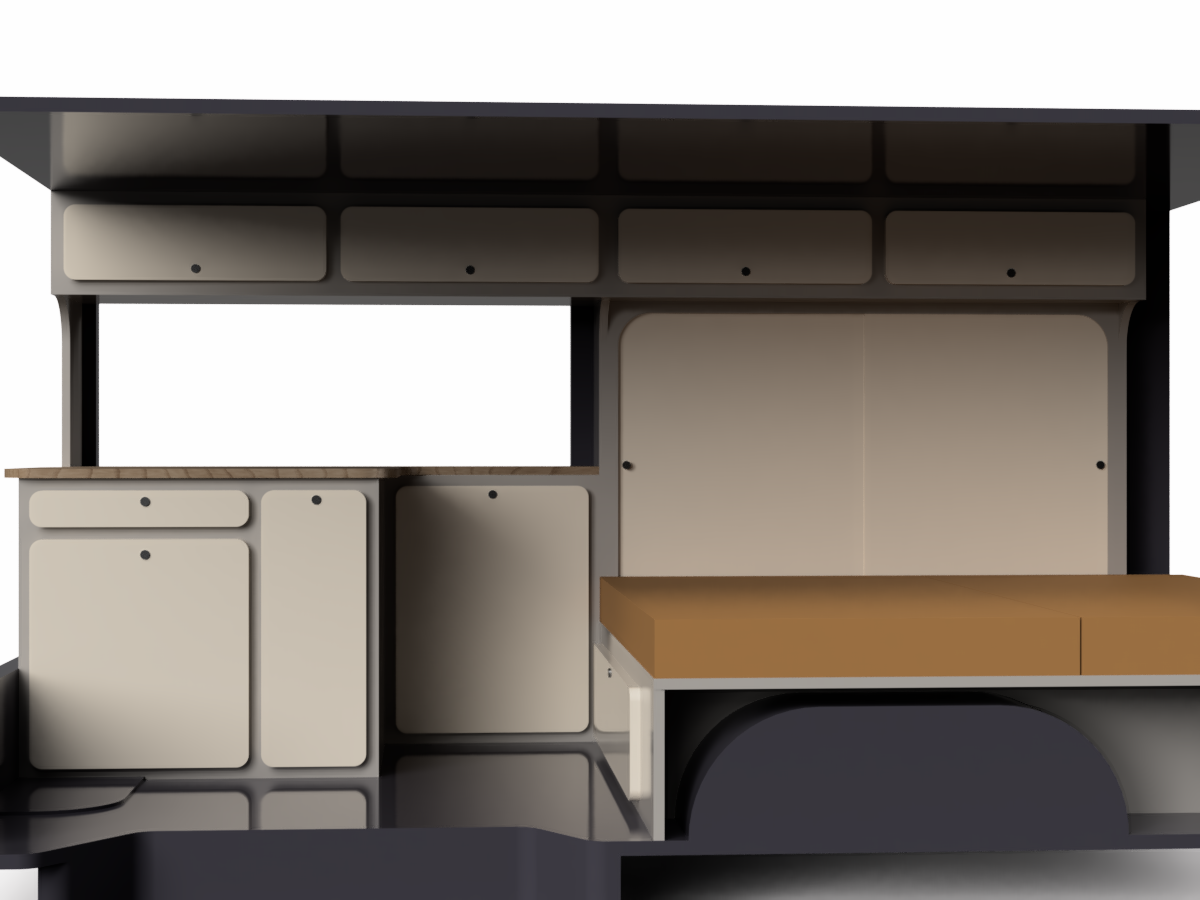
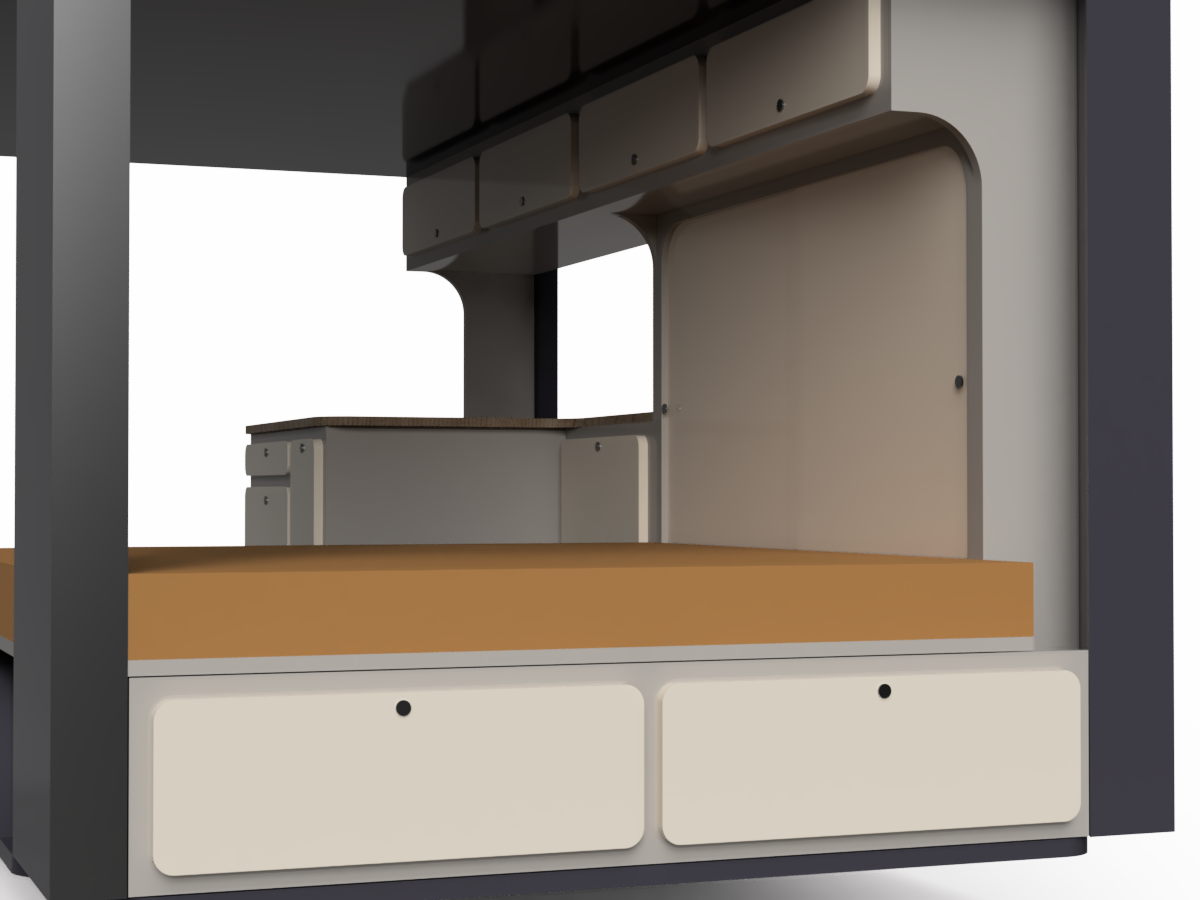
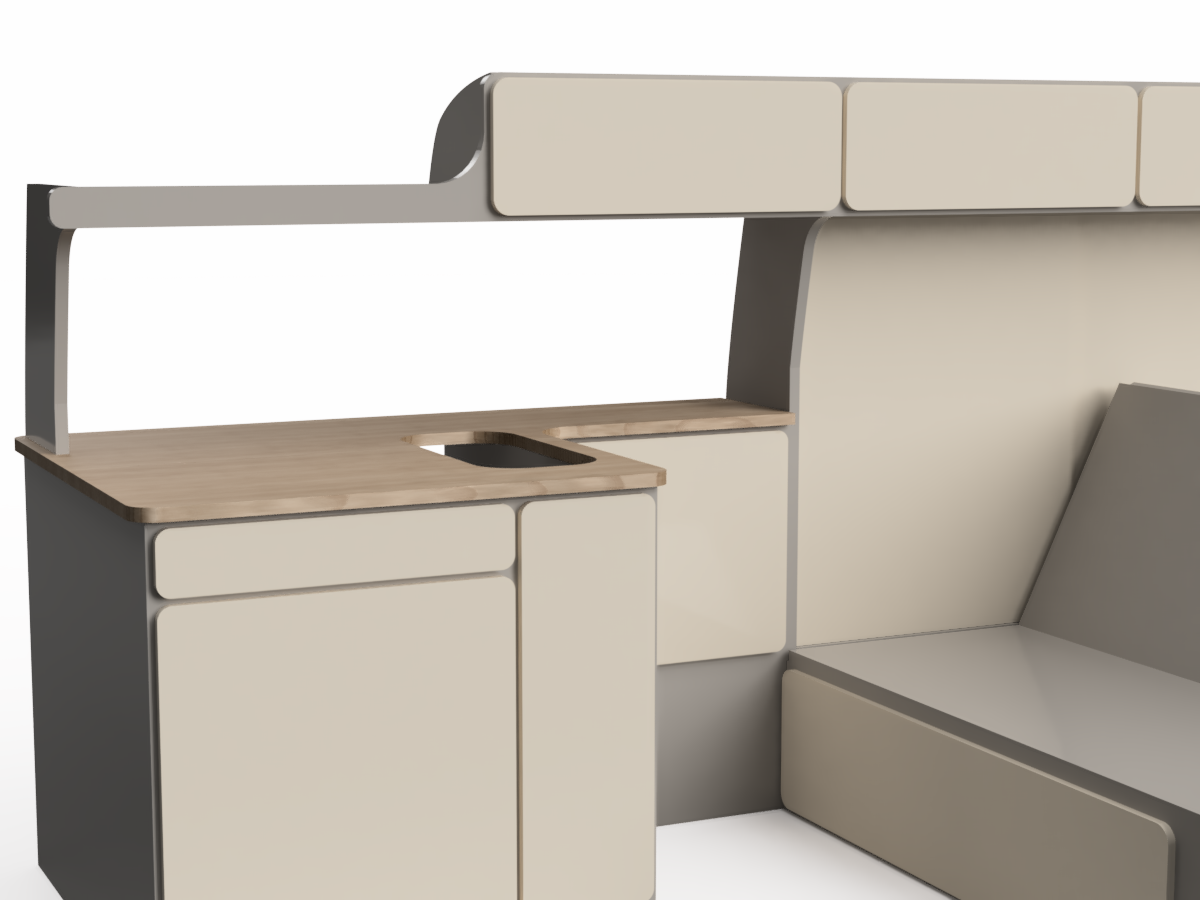
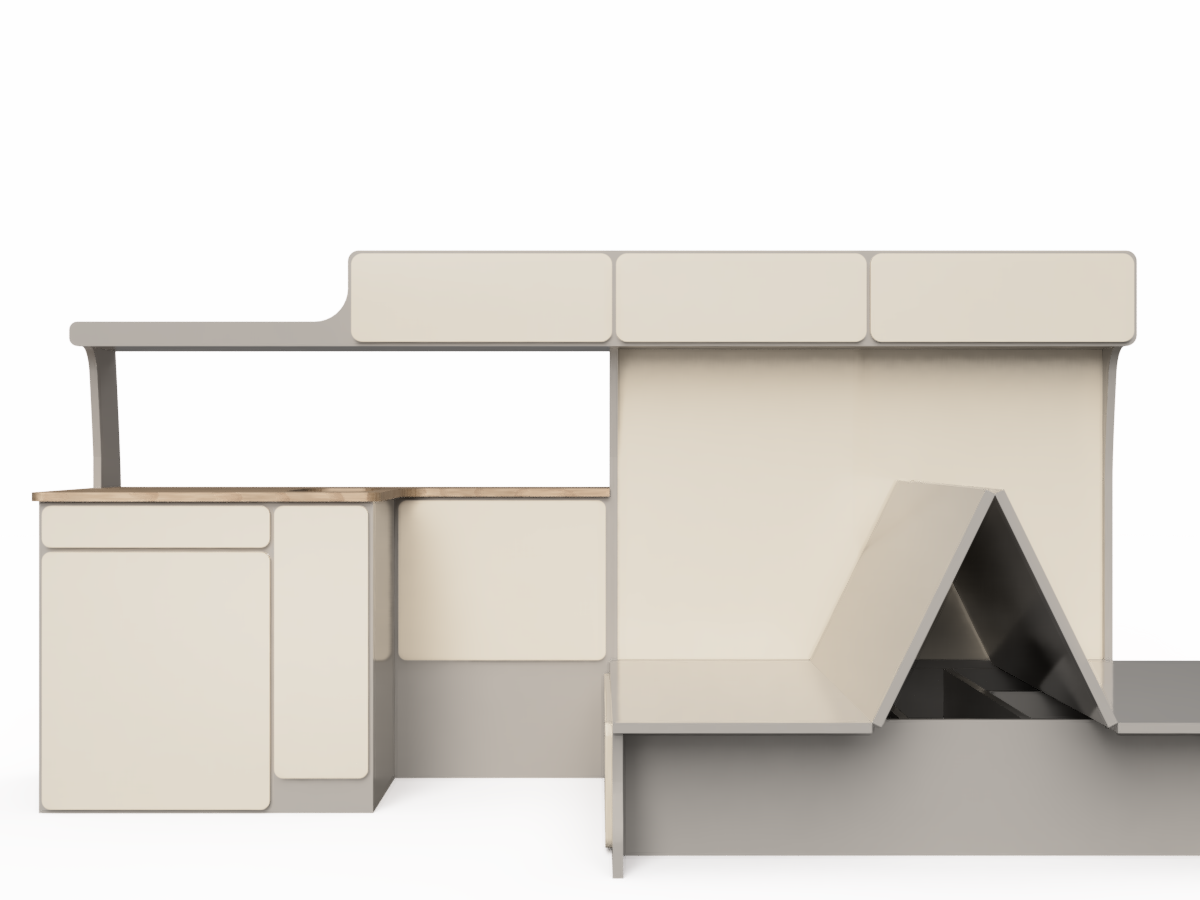
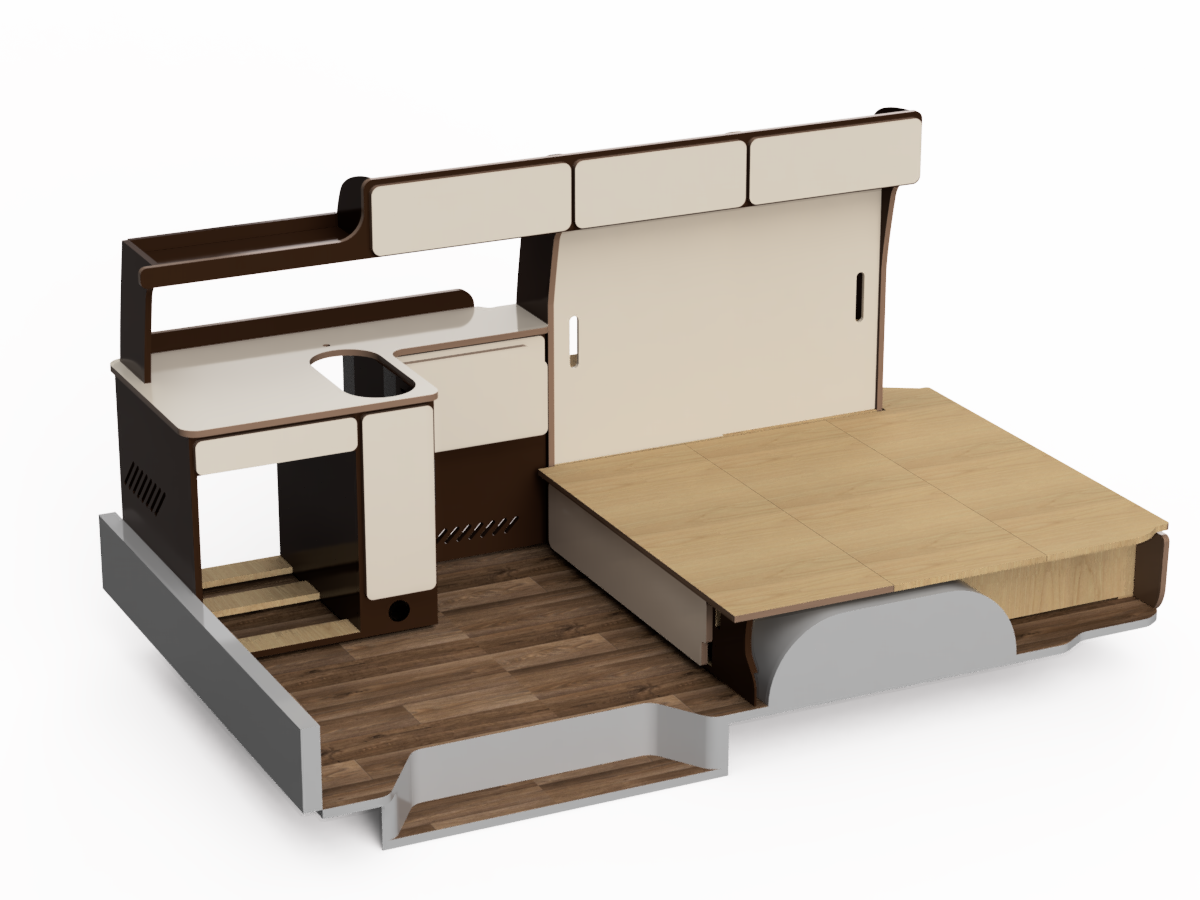
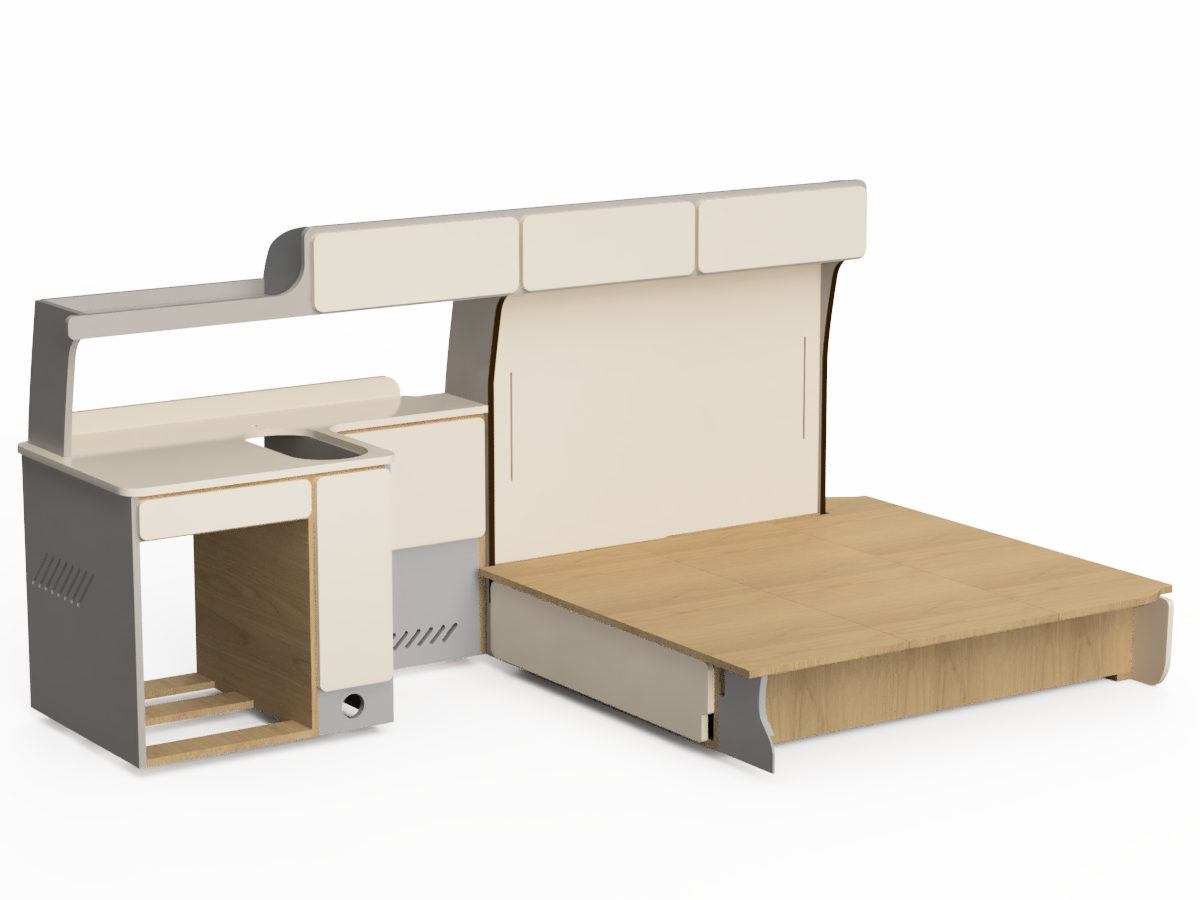
The blocking continued, but we got more refined through the process and honed in on what we wanted the camper to look like. We used this model to layout how everything would fit in the van checking clearances and other fits. We progressed until we were at a point where we were ready for a prototype.
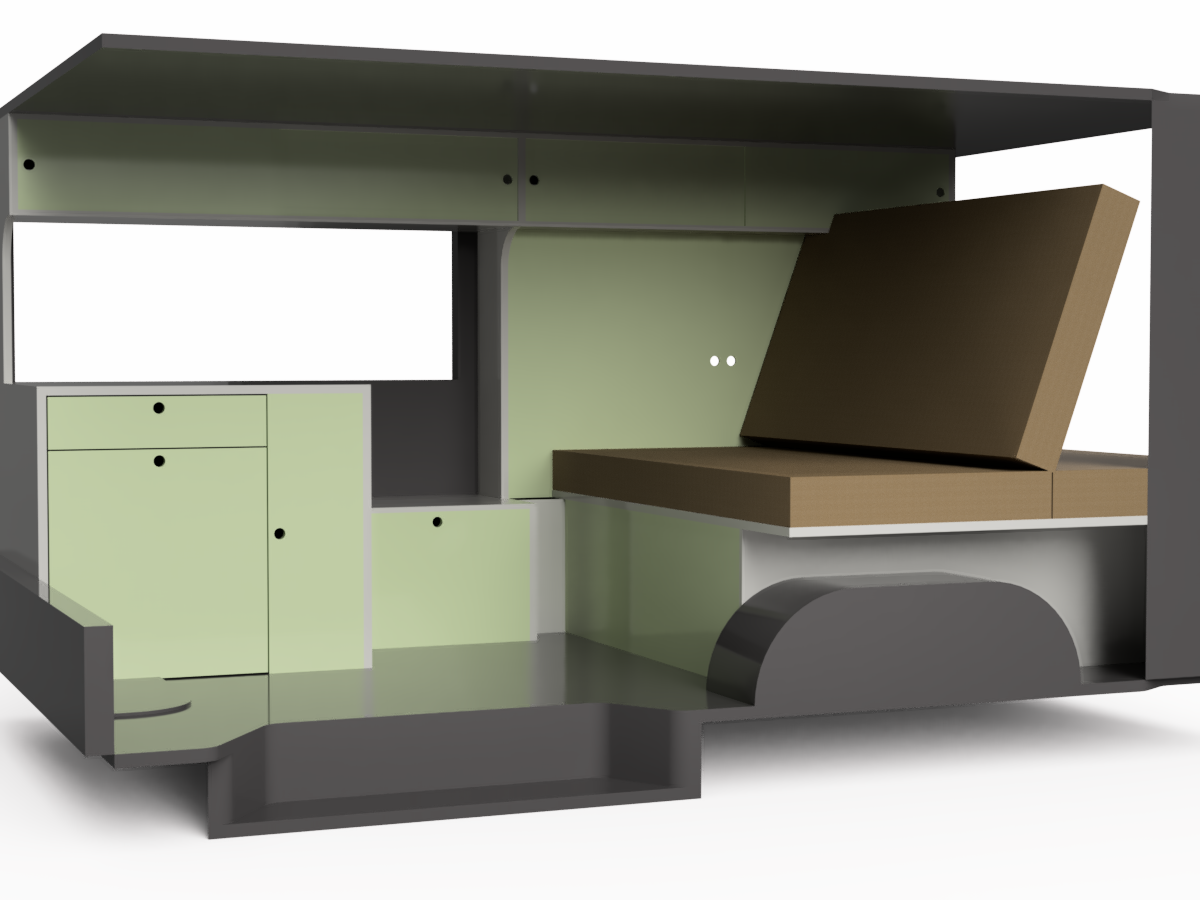
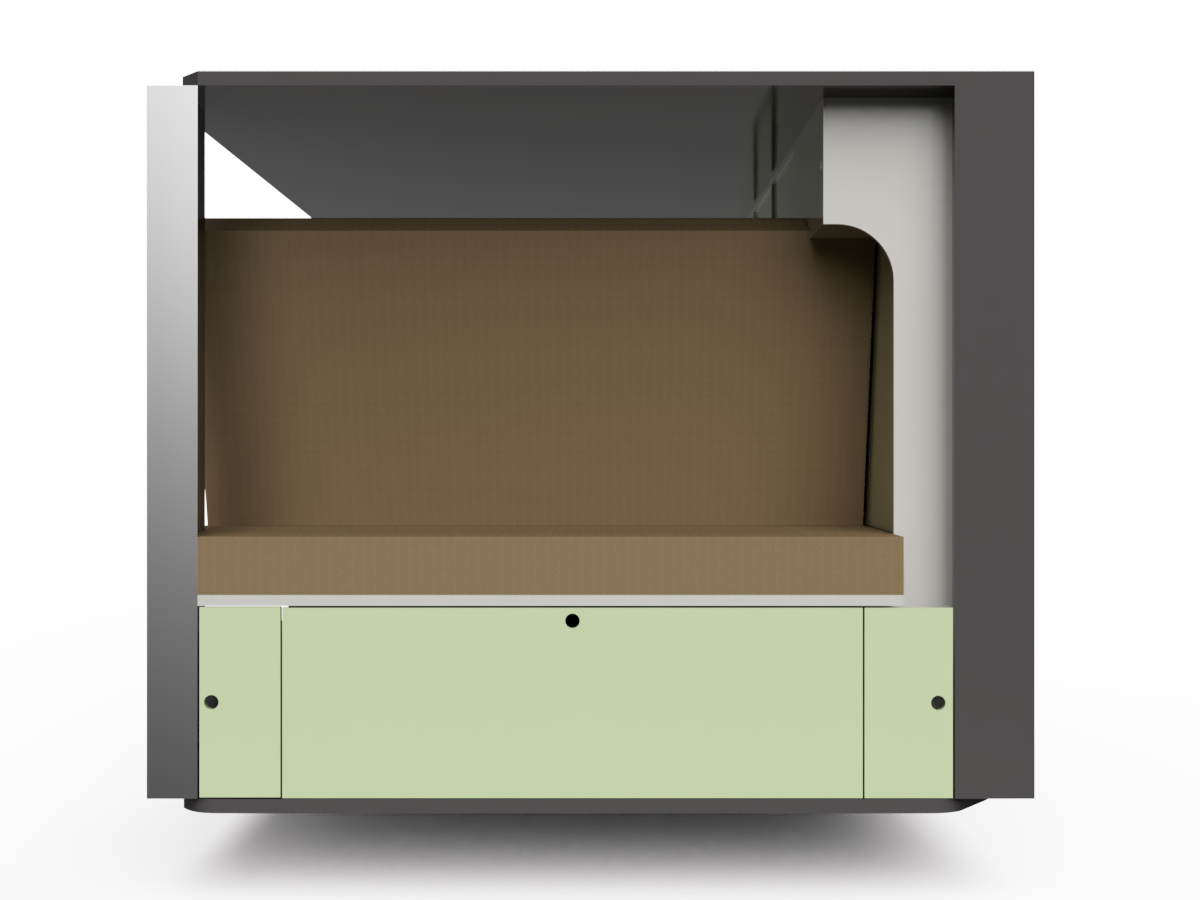
Hiace van build out cad model progression
arrow

Creating the prototype

Although the first design was close to being ready for manufacturing, it made more sense for me to make the first prototype using my small workshop and working out the final kinks myself. I took scribes, made sketches first then jumped into roughing the shape. I then tackled individual problems like the bed mechanism, fridge unit and other solutions that needed well thought out solutions.
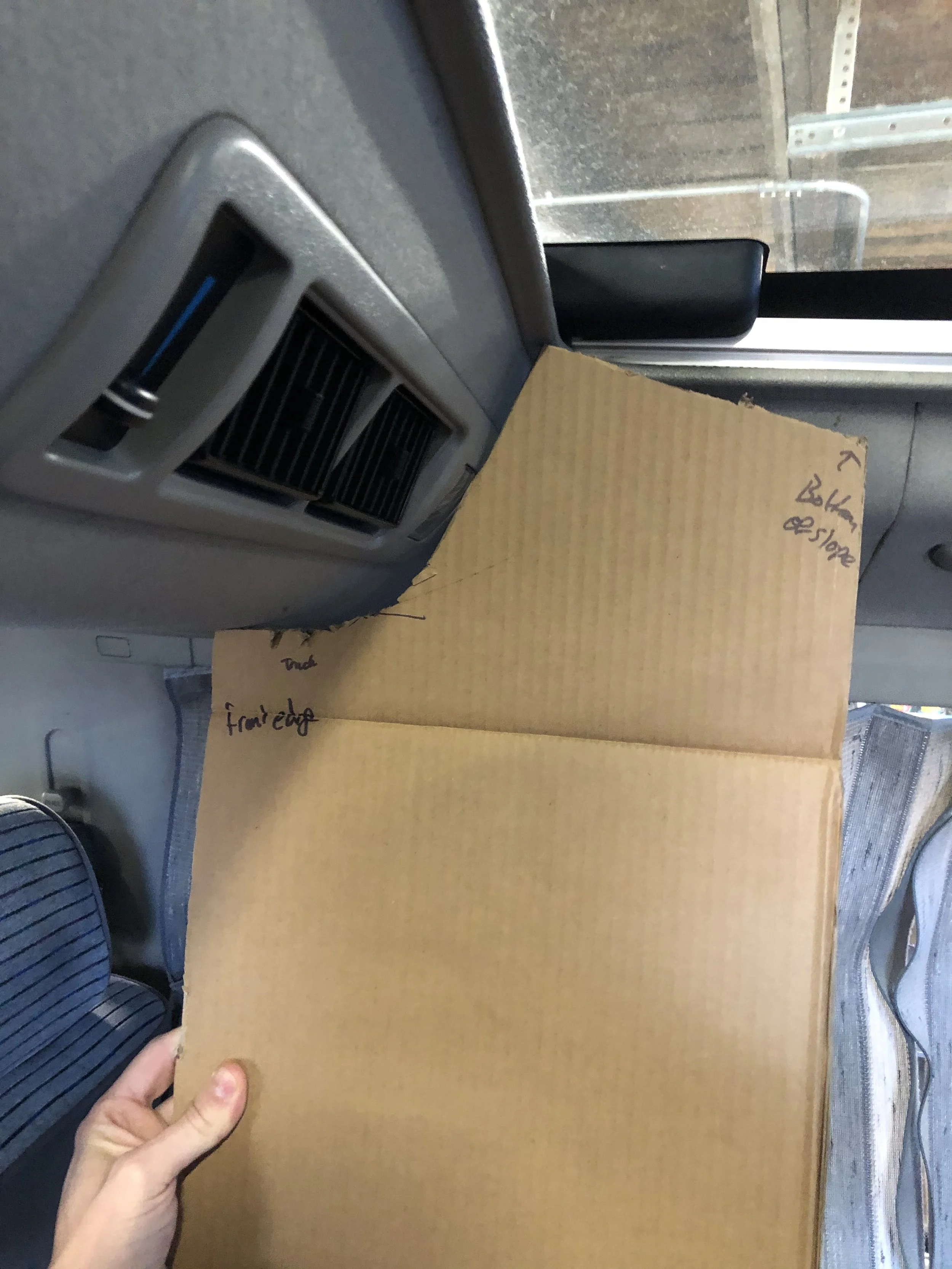
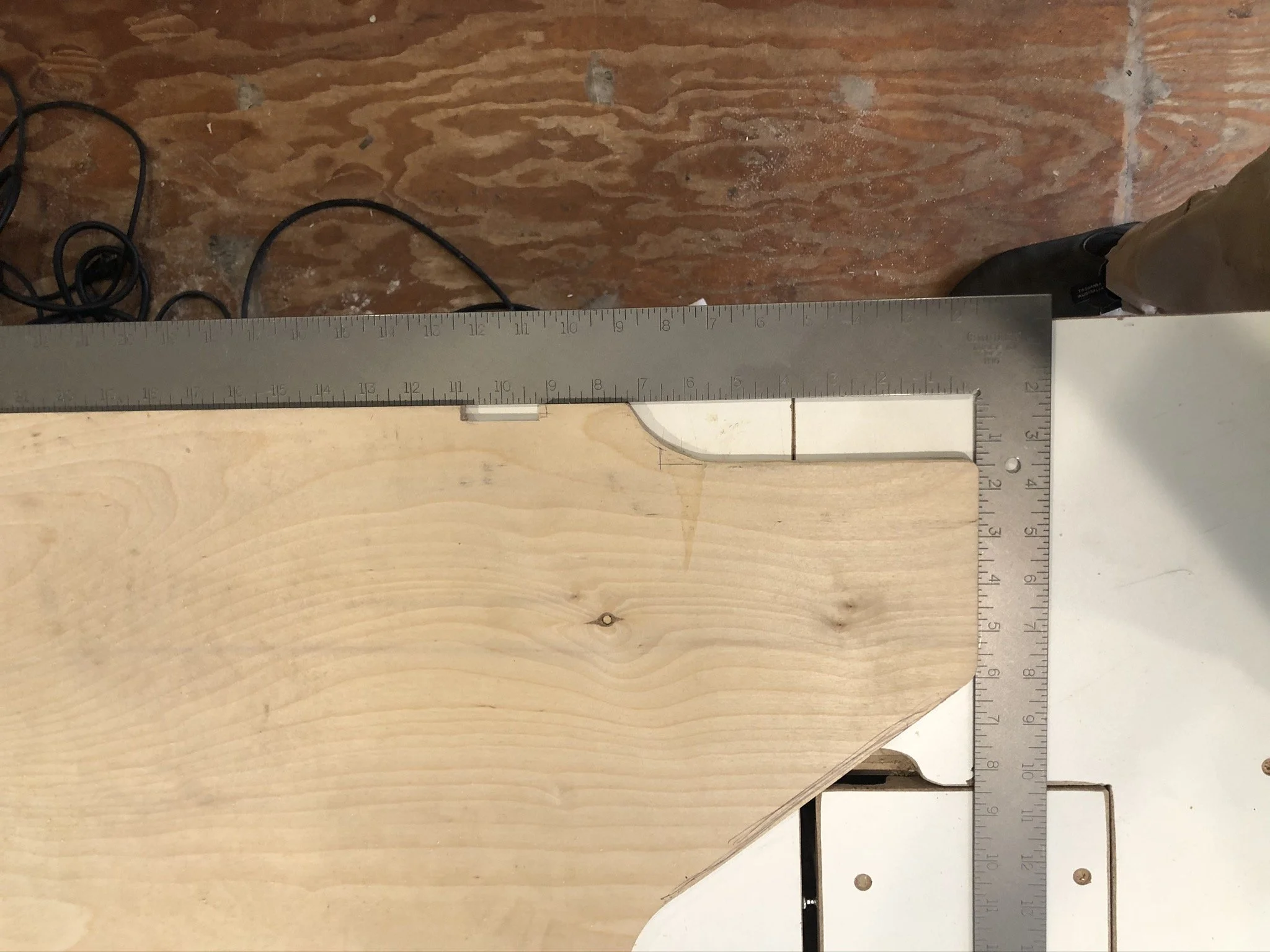
Close-up of a person's hand holding a cardboard piece with handwritten notes, inside a vehicle near the dashboard and air vent, with a window showing the outside. Testing a scribe
A piece of light-colored wood on a table with a metal square ruler and a desk lamp or power cord nearby.
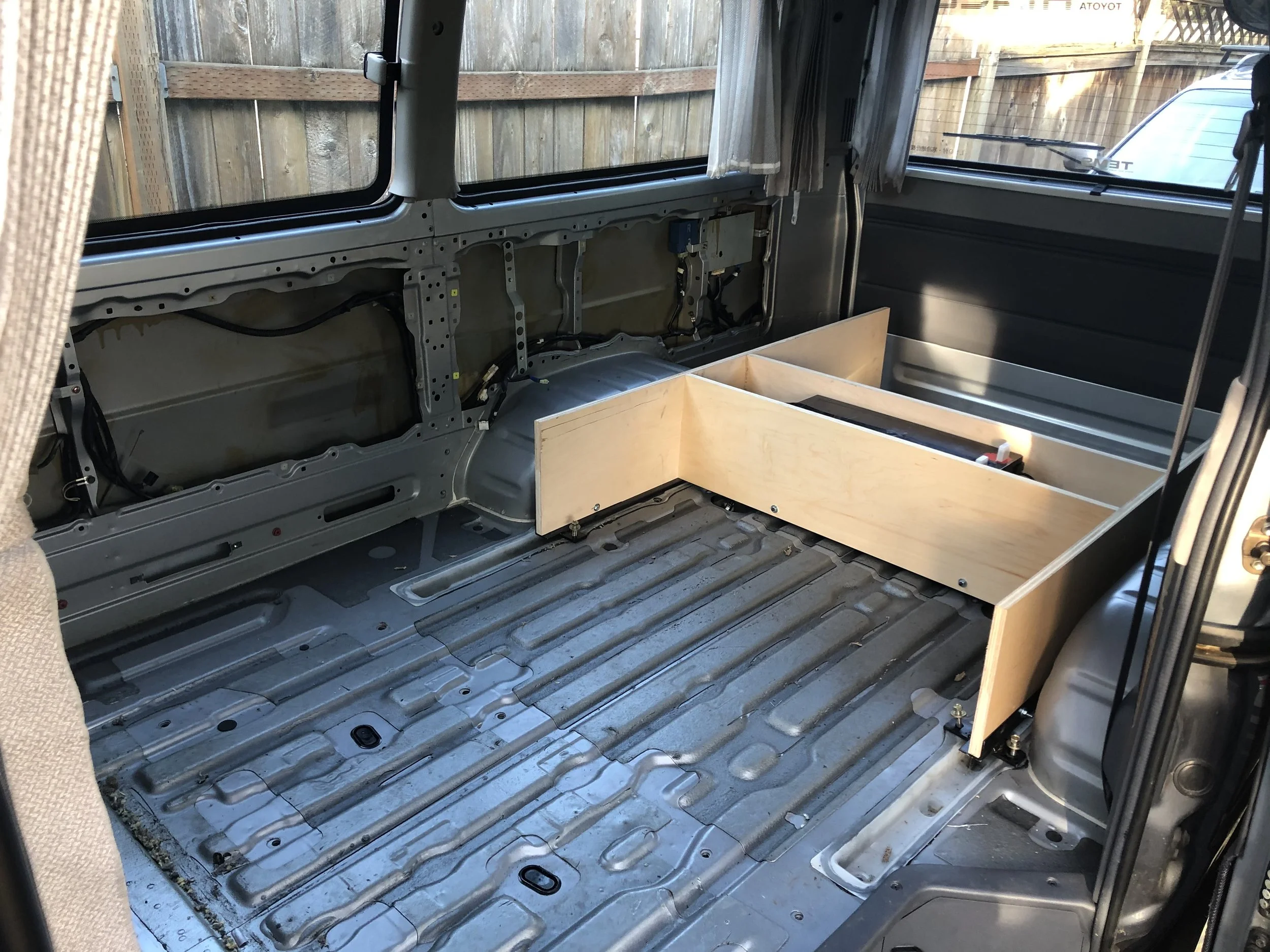
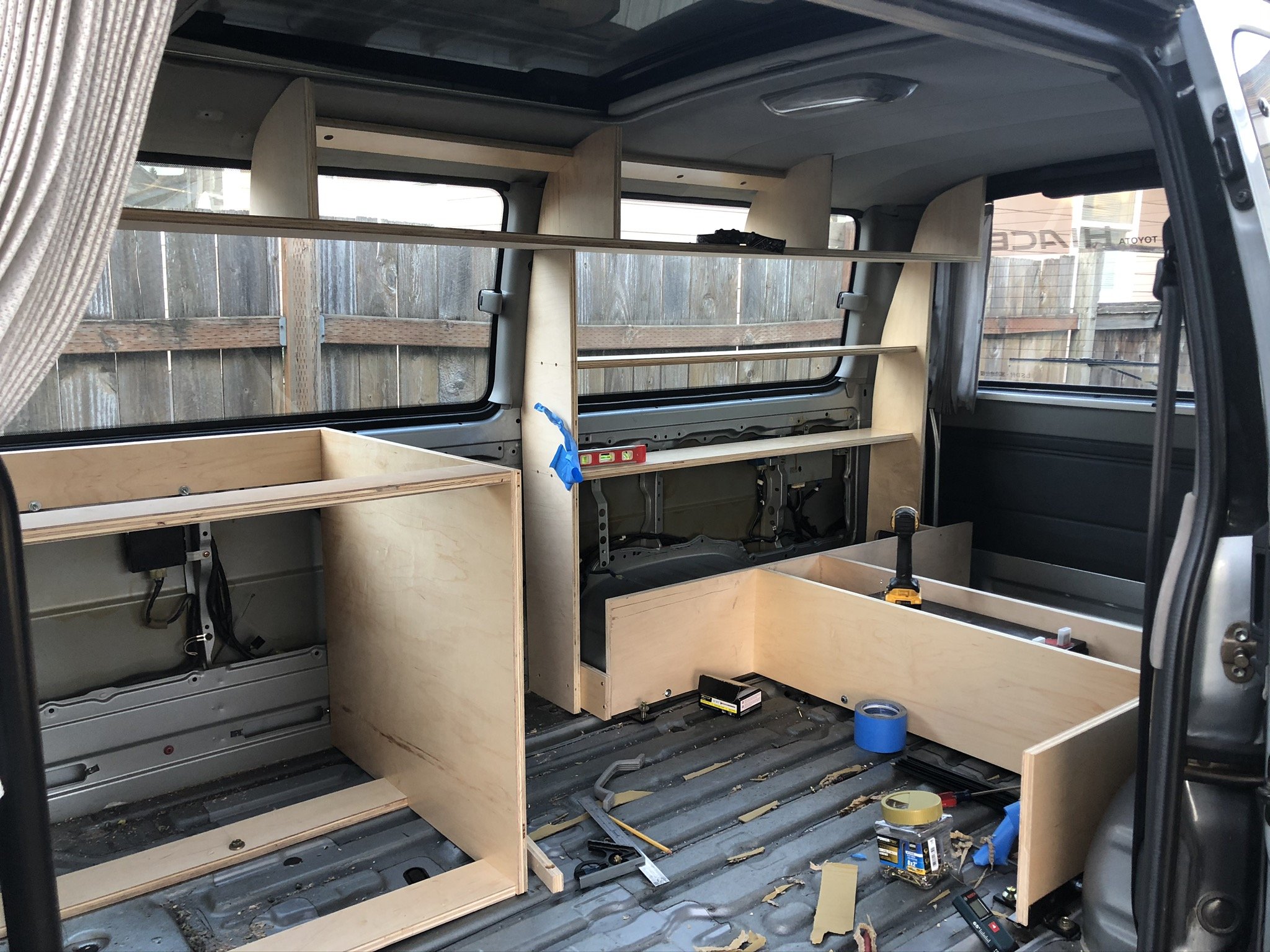
Interior of a camper or van under renovation, showing metal framework and flooring with some wiring, and wooden panels installed in progress. Faint outdoor view visible through the windows.
Arrow
Interior of a van under renovation with wooden framing and shelves being installed.
arrow
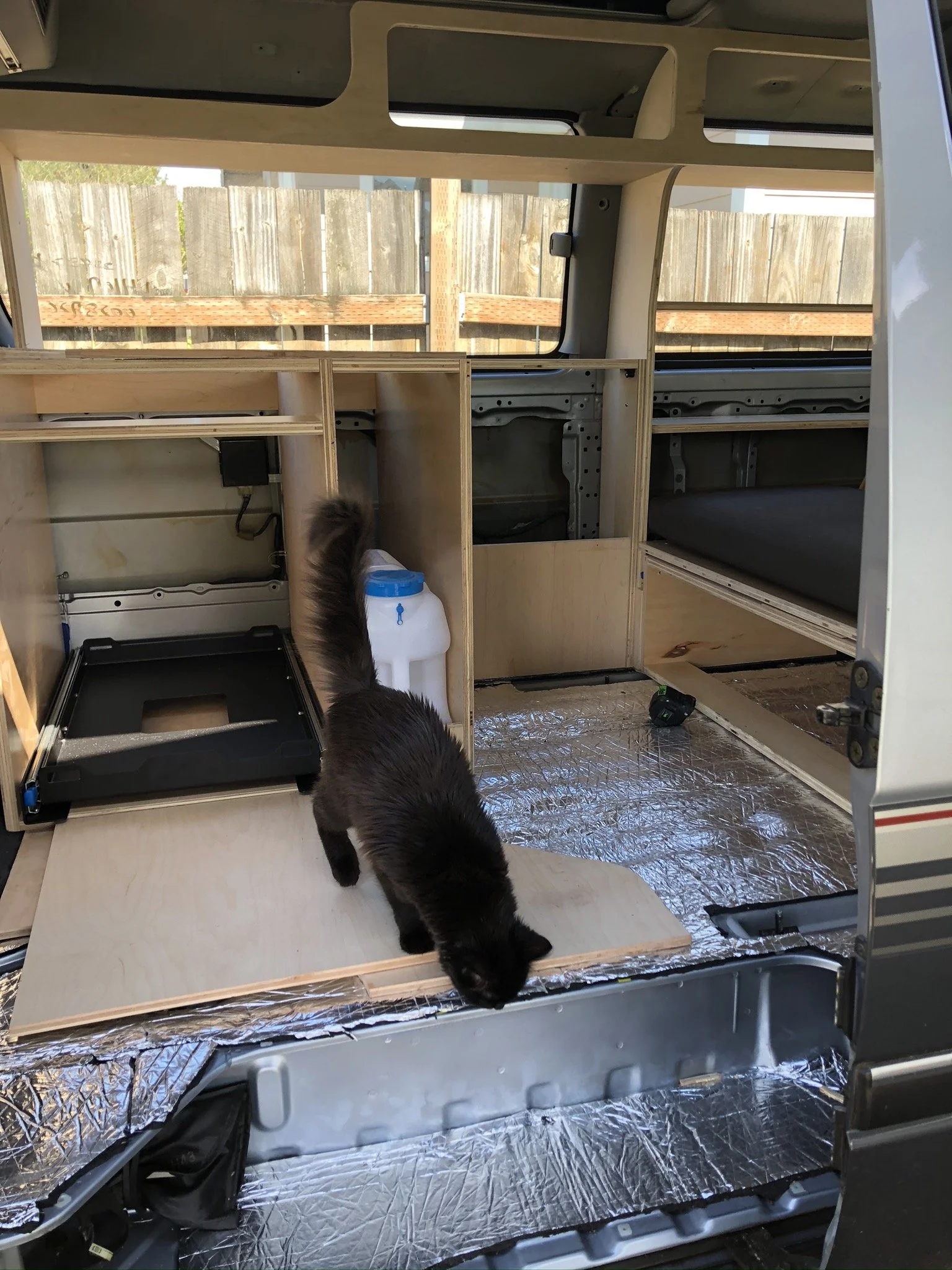
A partially assembled camper van interior with wooden panels, a black pet crate, a water container, and a black cat inside, with a wooden fence and building outside the window.
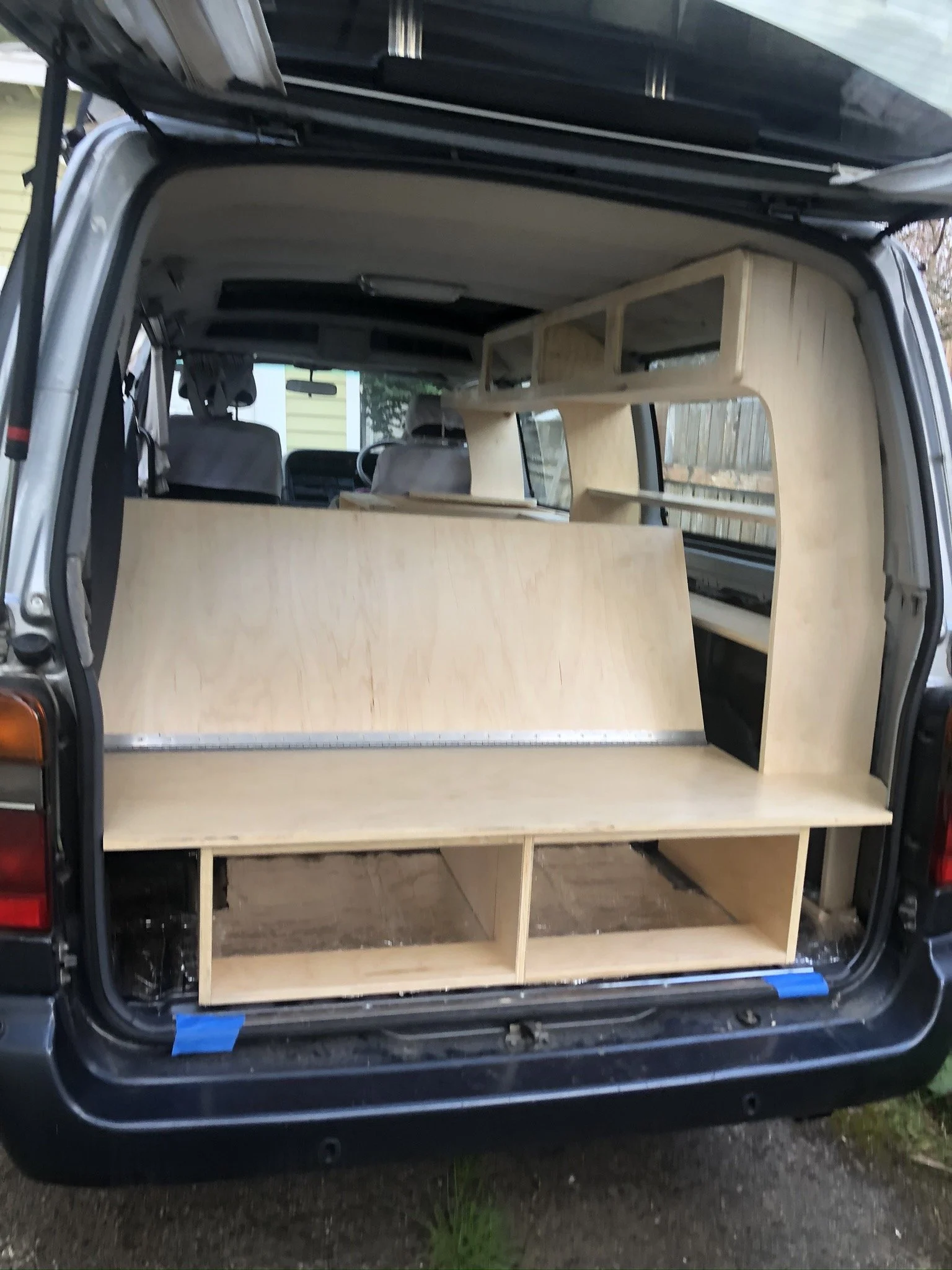
The back of a black van with the rear doors open, revealing a wooden shelving unit being installed inside the vehicle.
arrow
arrow
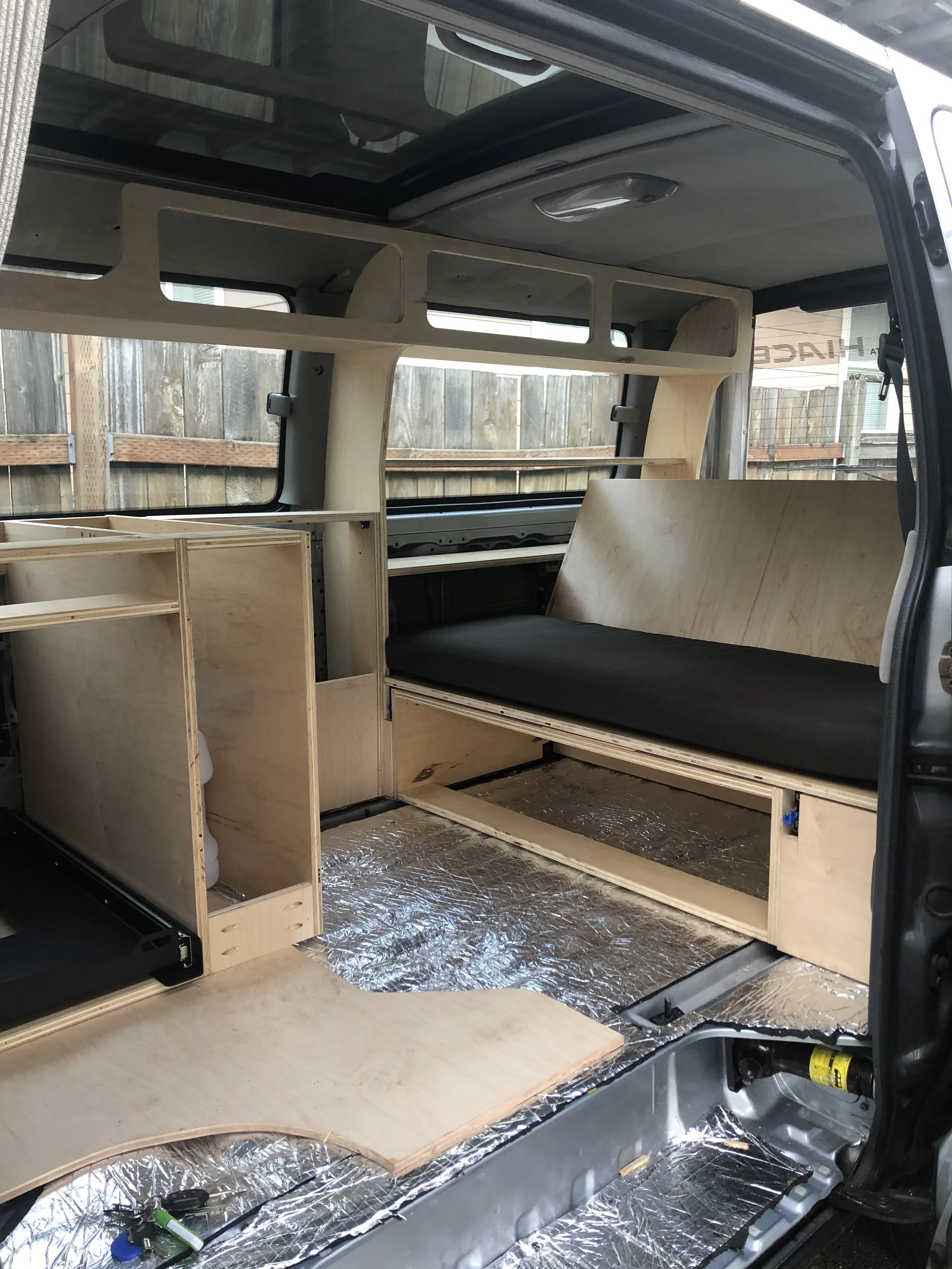
The interior of a vehicle being converted into a camper van with wooden cabinetry, a cushioned seating area, and a metallic insulated floor.
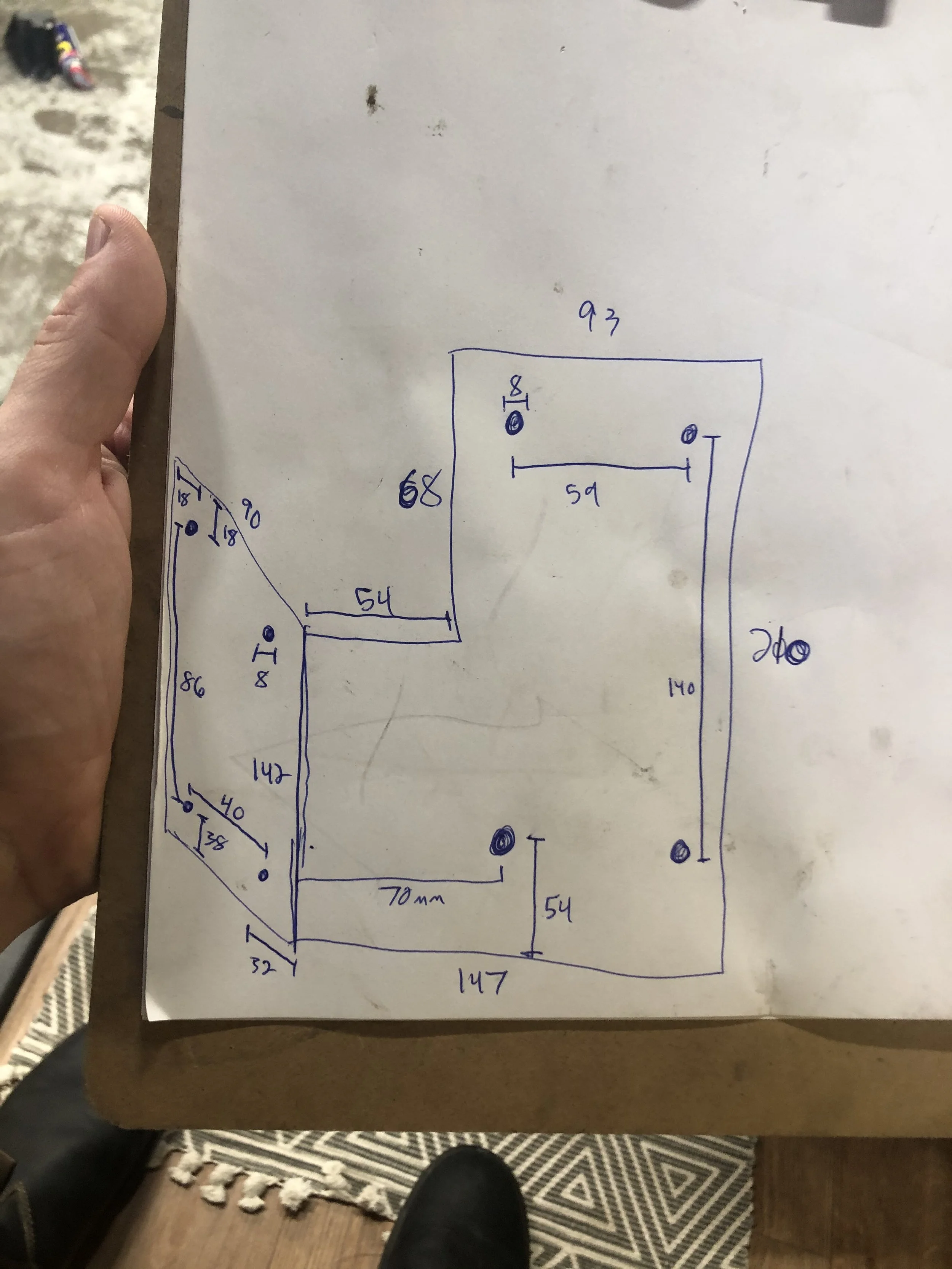
A whiteboard with hand-drawn sketches and measurements of rectangular objects, including dimensions like 147mm, 142mm, 140mm, and 54mm, with some circular marks and lines connecting the measurements.
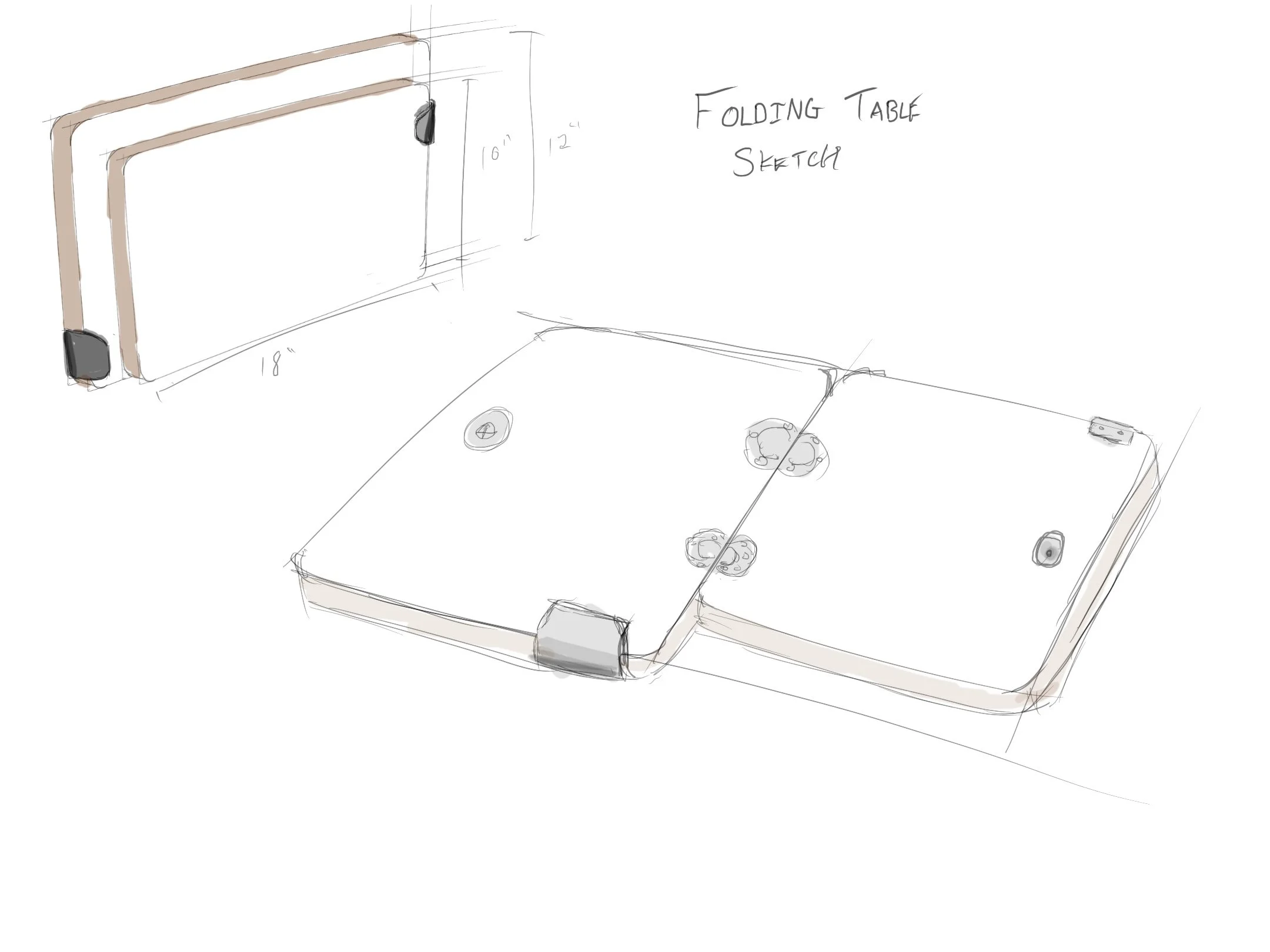
A sketch of a folding table with measurements of 10 inches, 12 inches, and 18 inches labeled, along with some additional hardware and a handwritten note that says 'Folding Table Sketch'.
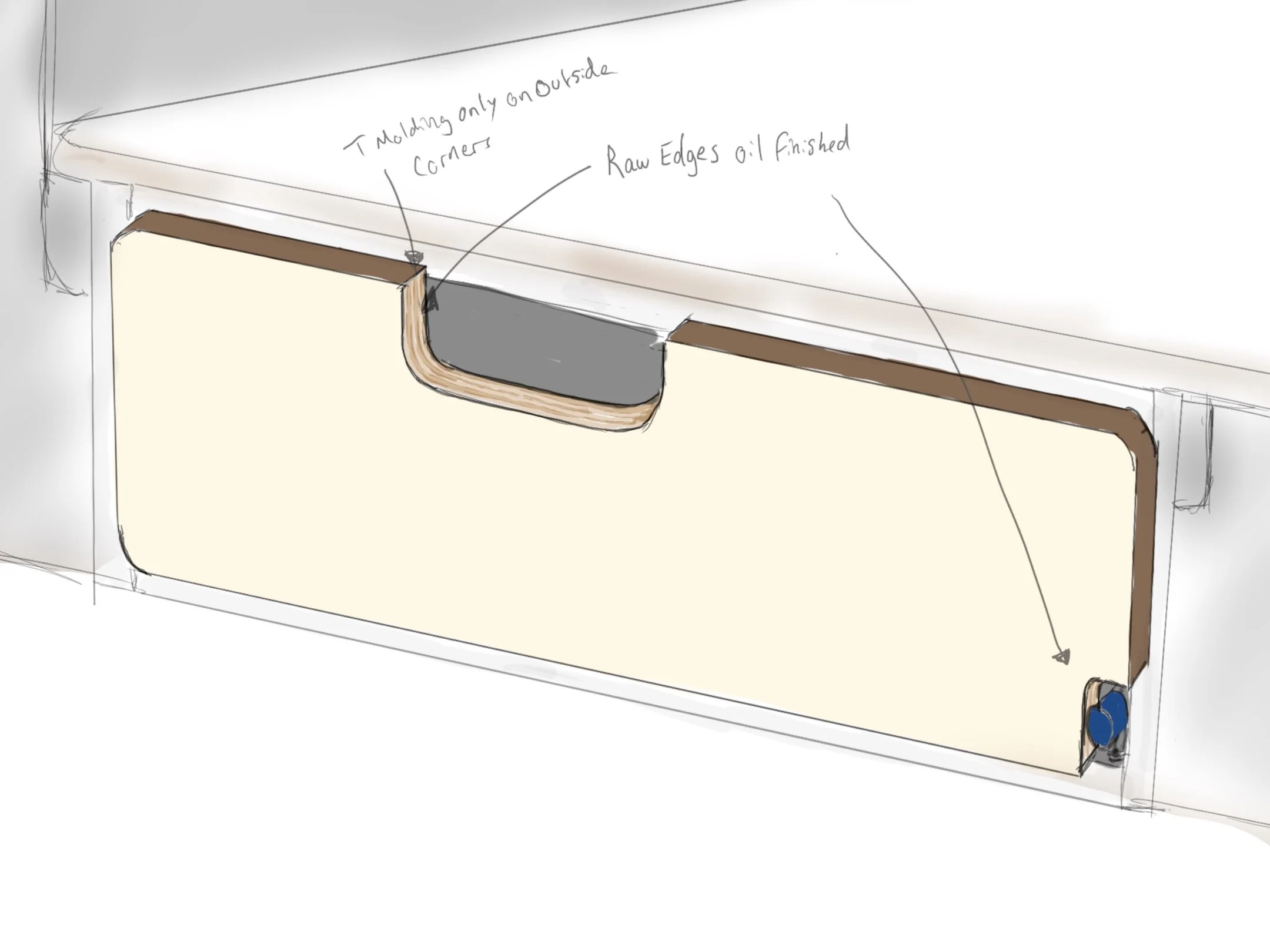
A sketch of a drawer face, notes regarding raw edges and molding.
arrow

Prototype refinement

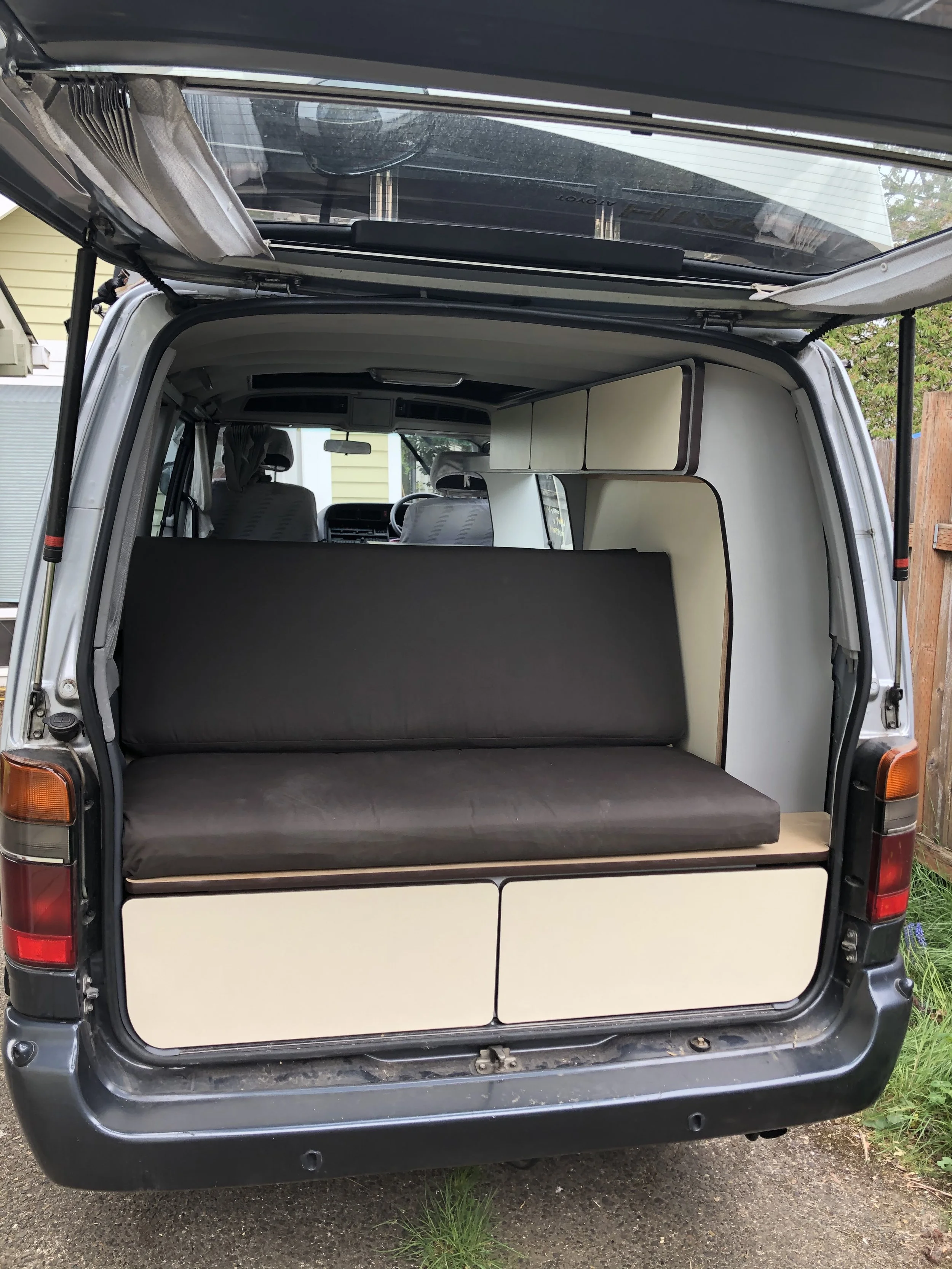
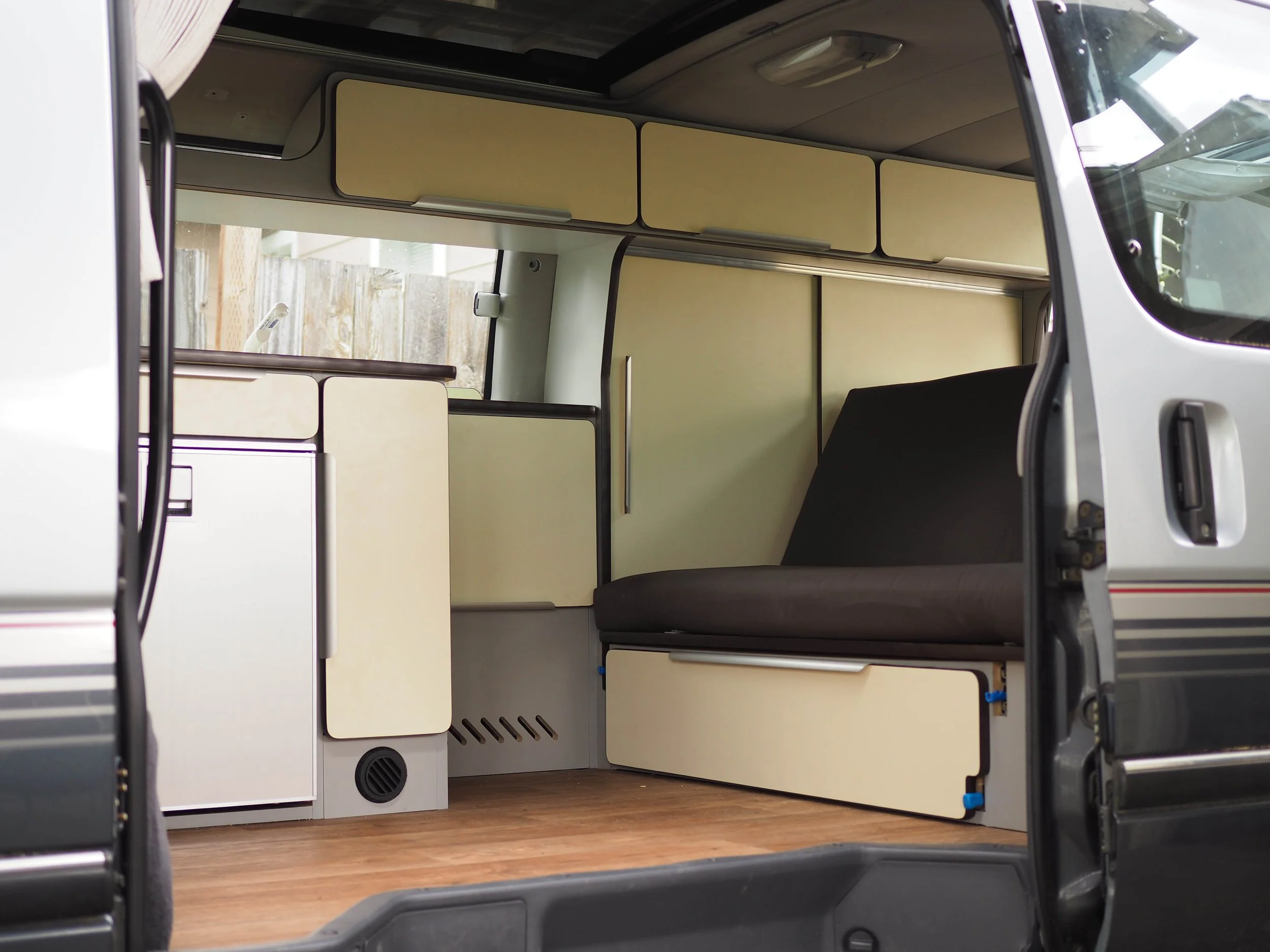
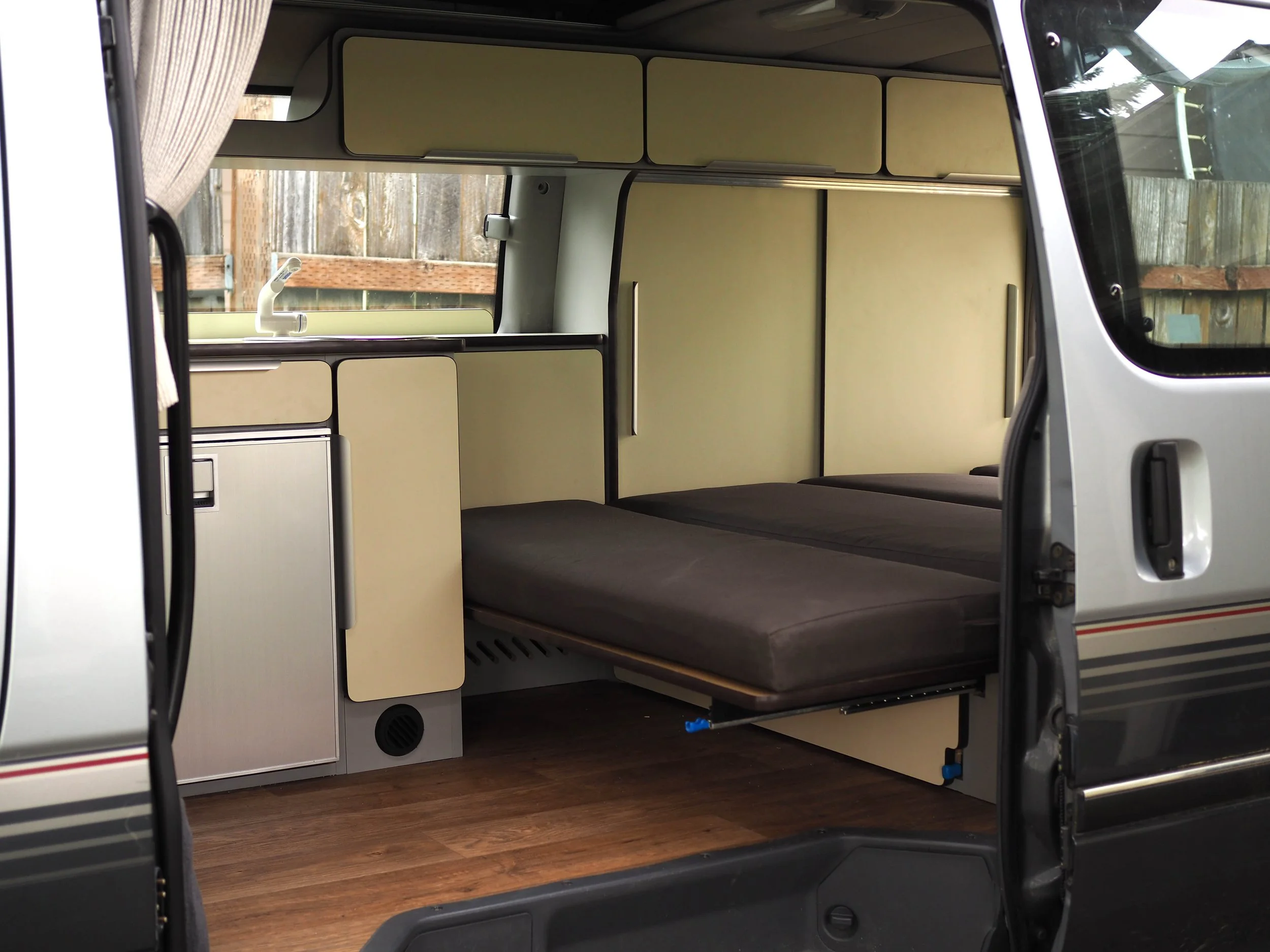
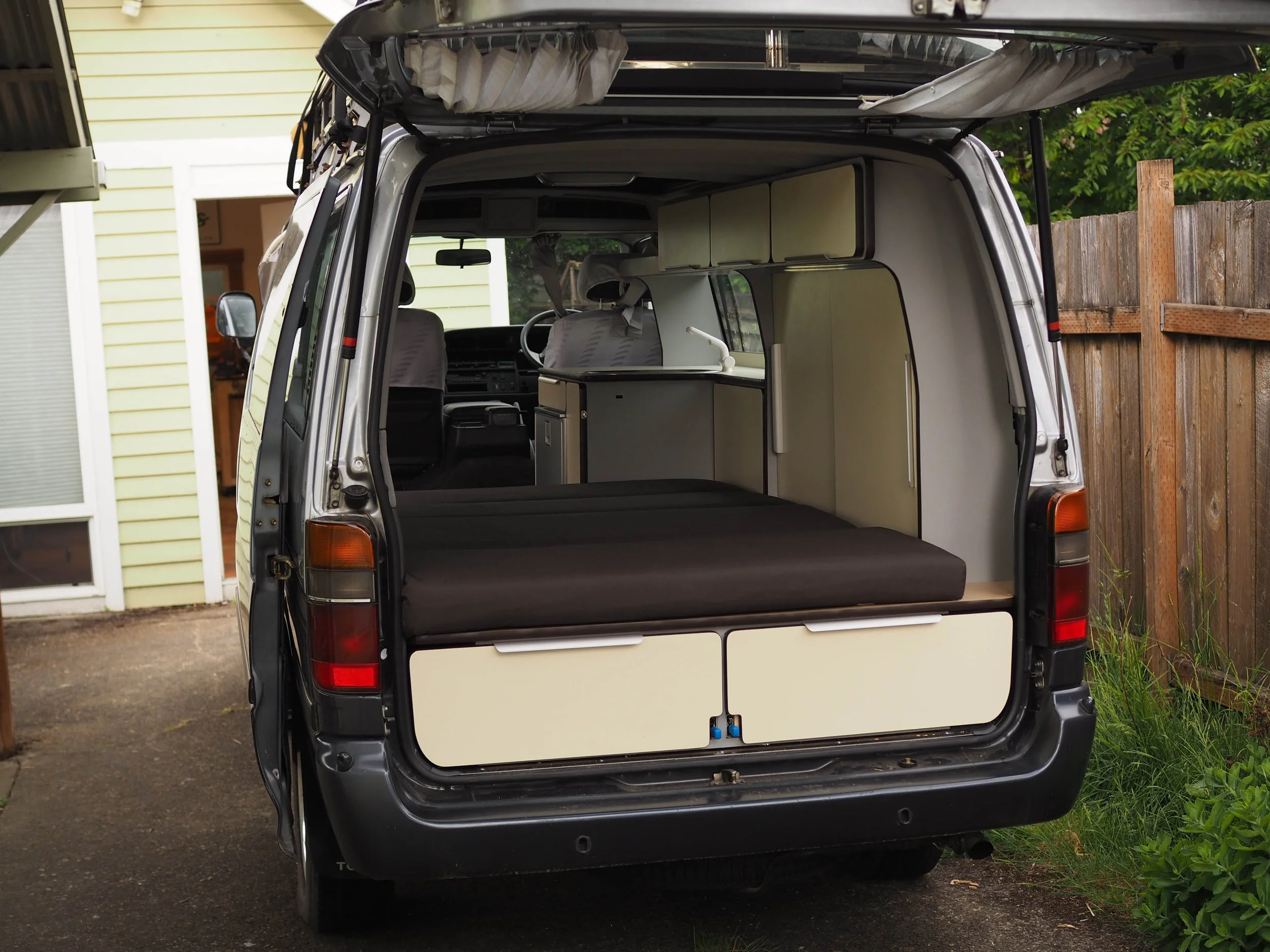
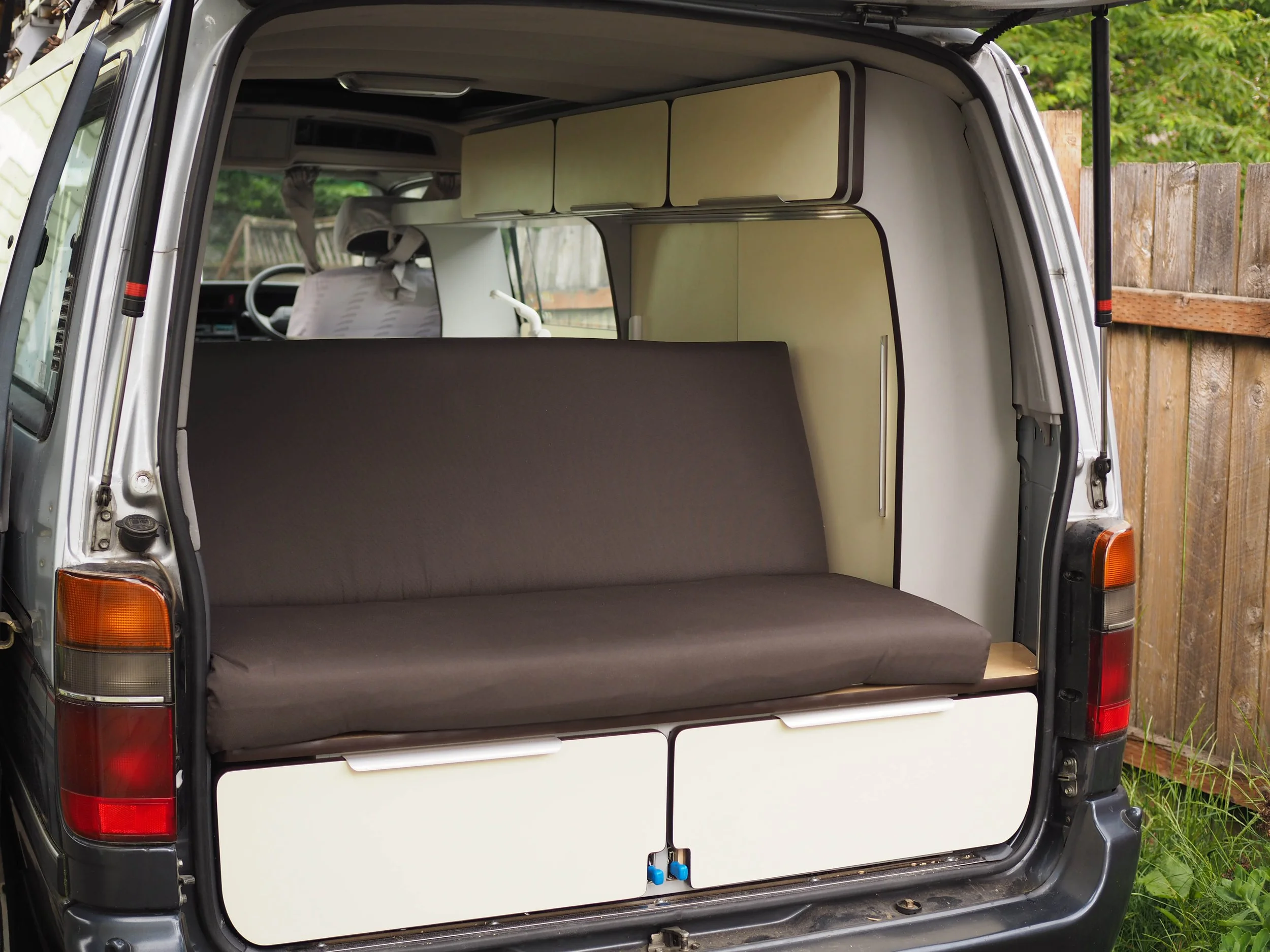
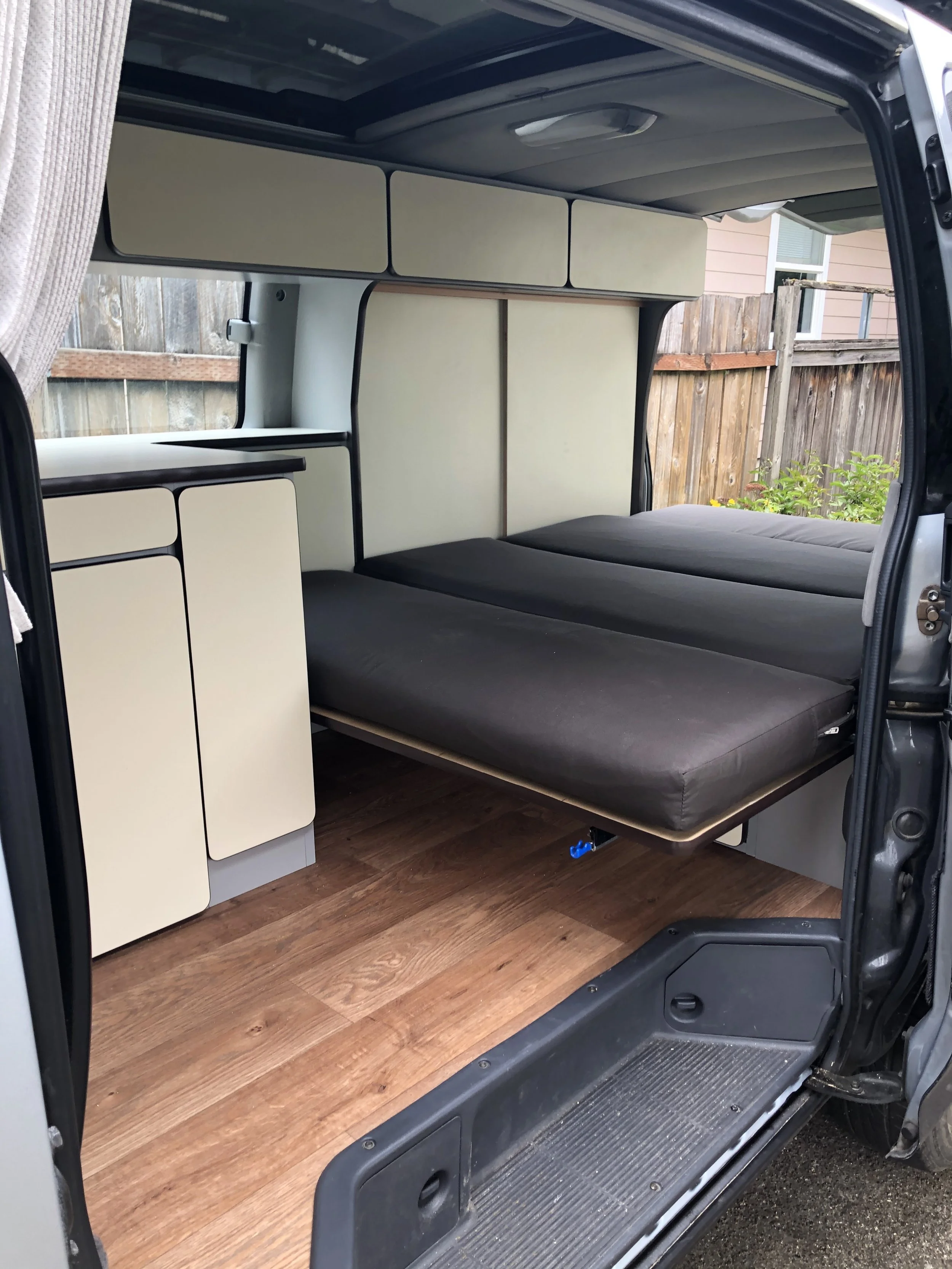
The rough prototype was finished with a laminate and either edge banding or t-molding to add a vintage camper finish and feel. Things iterated on and improved, different components like the fridge was removed and replaced with a different unit. This model was basically version 1 as I think it did pass the “what is called a prototype” threshold.
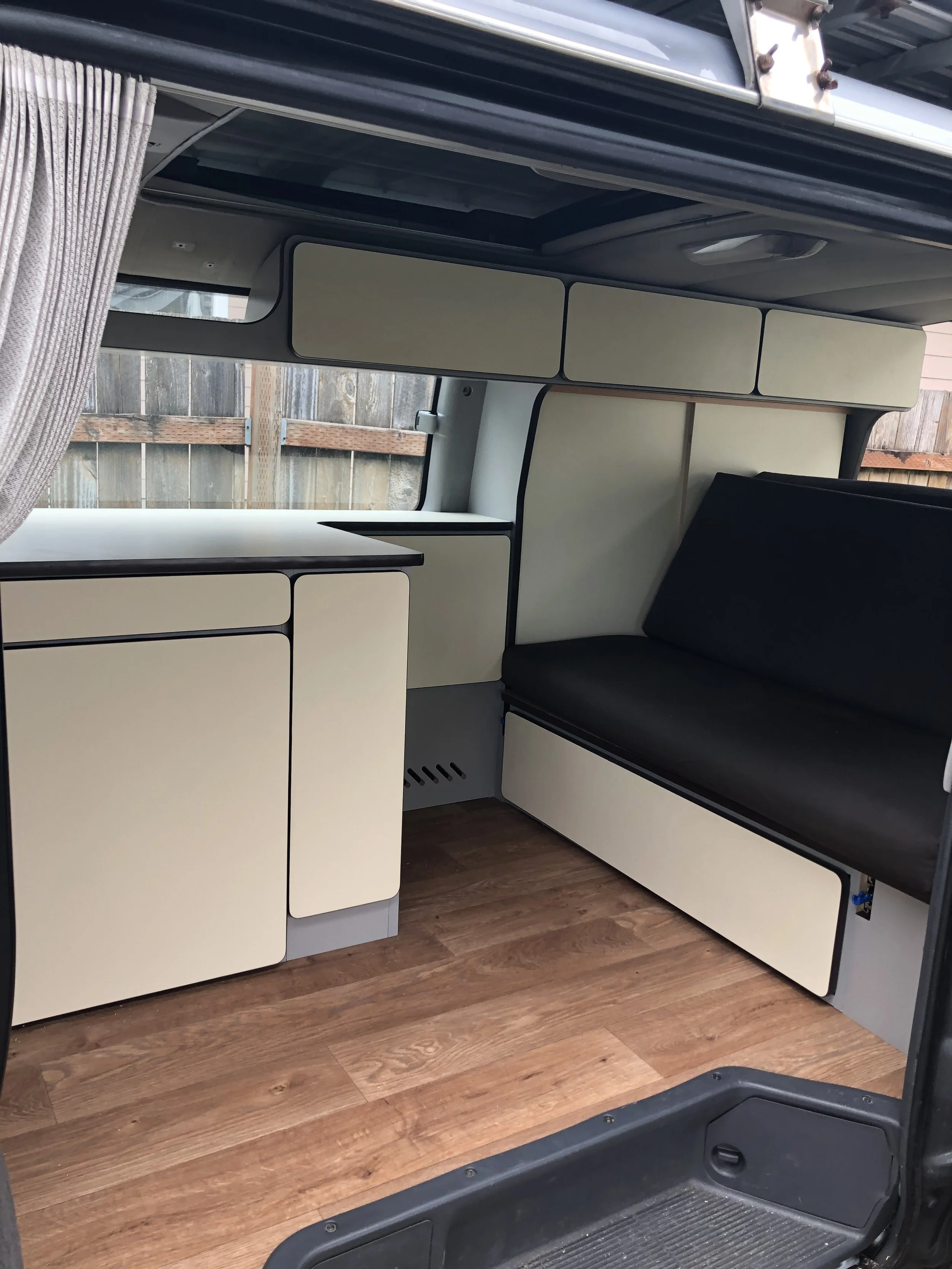
Interior of a camper van with beige cabinets, a black cushioned seating area, and wood flooring.
Inside a van converted into a camper, with wooden flooring, storage cabinets, a bed, and a large window with a view of a wooden fence and house exterior outside.
Rear view of a van with the back doors open, showing a black padded bed inside and beige cabinets above it. The vehicle is parked on a gravel driveway with some grass nearby.
Interior of a camper van or RV showing storage cabinets, a small sink, and a wood floor, with an open rear door.
Interior of a camper van with beige storage cabinets, a small refrigerator, a sink, wooden flooring, and windows showing an outdoor fence.
Open van with a custom interior setup, including storage cabinets and a workspace, parked outdoors next to a wooden fence with a house in the background.
The back of a small van with its rear doors open, revealing an interior with white shelving units and a gray bench seat, parked outdoors next to a wooden fence.
arrow

Final product

After the first prototype was finished, all changes were updated in CAD. Before it was completed, I located a small CNC manufacturer in Portland to take over the process. I worked with the owner and helped hand off manufacturing, essentially creating a second business and income stream for Vanlife Northwest, independent from the import and service work.

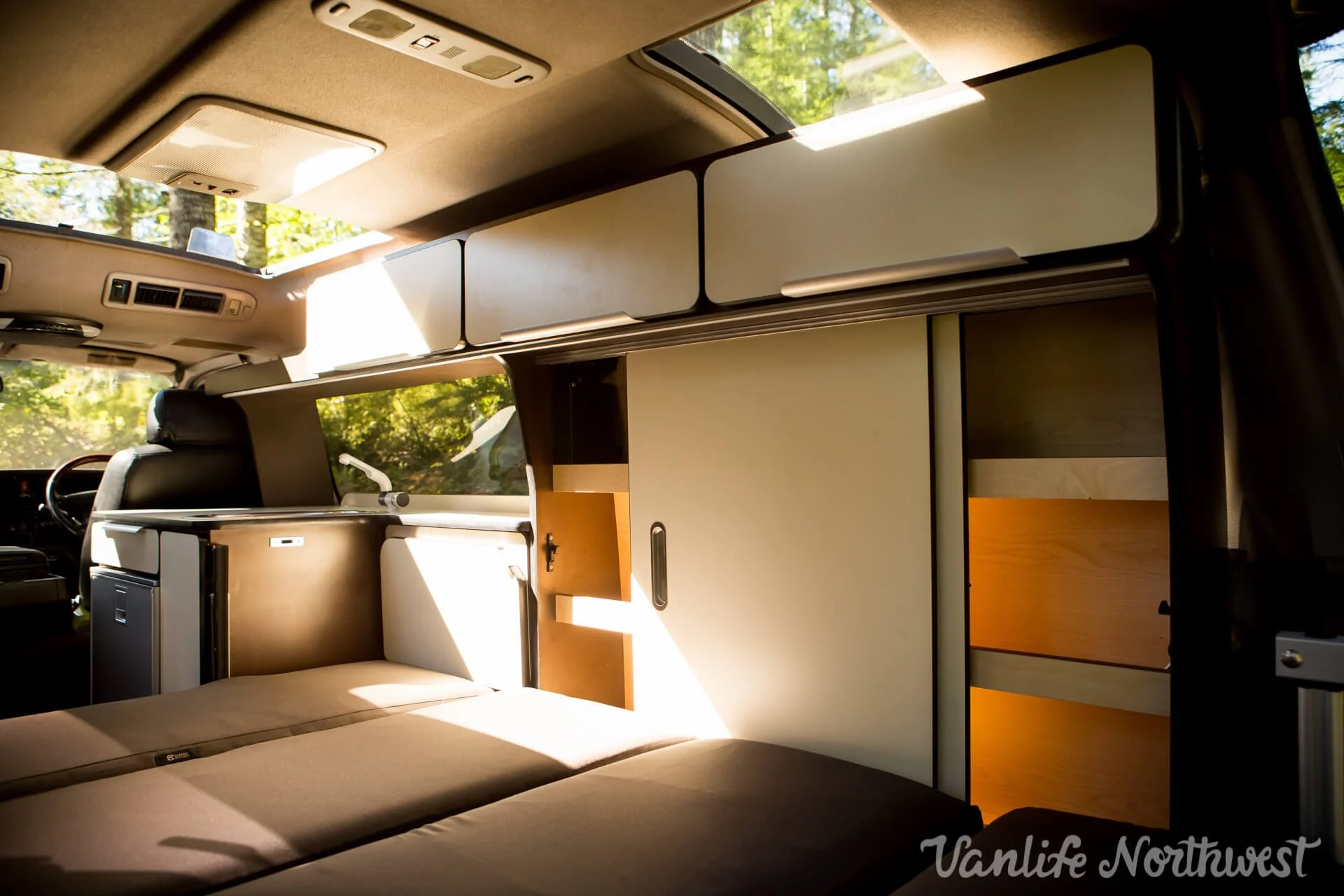
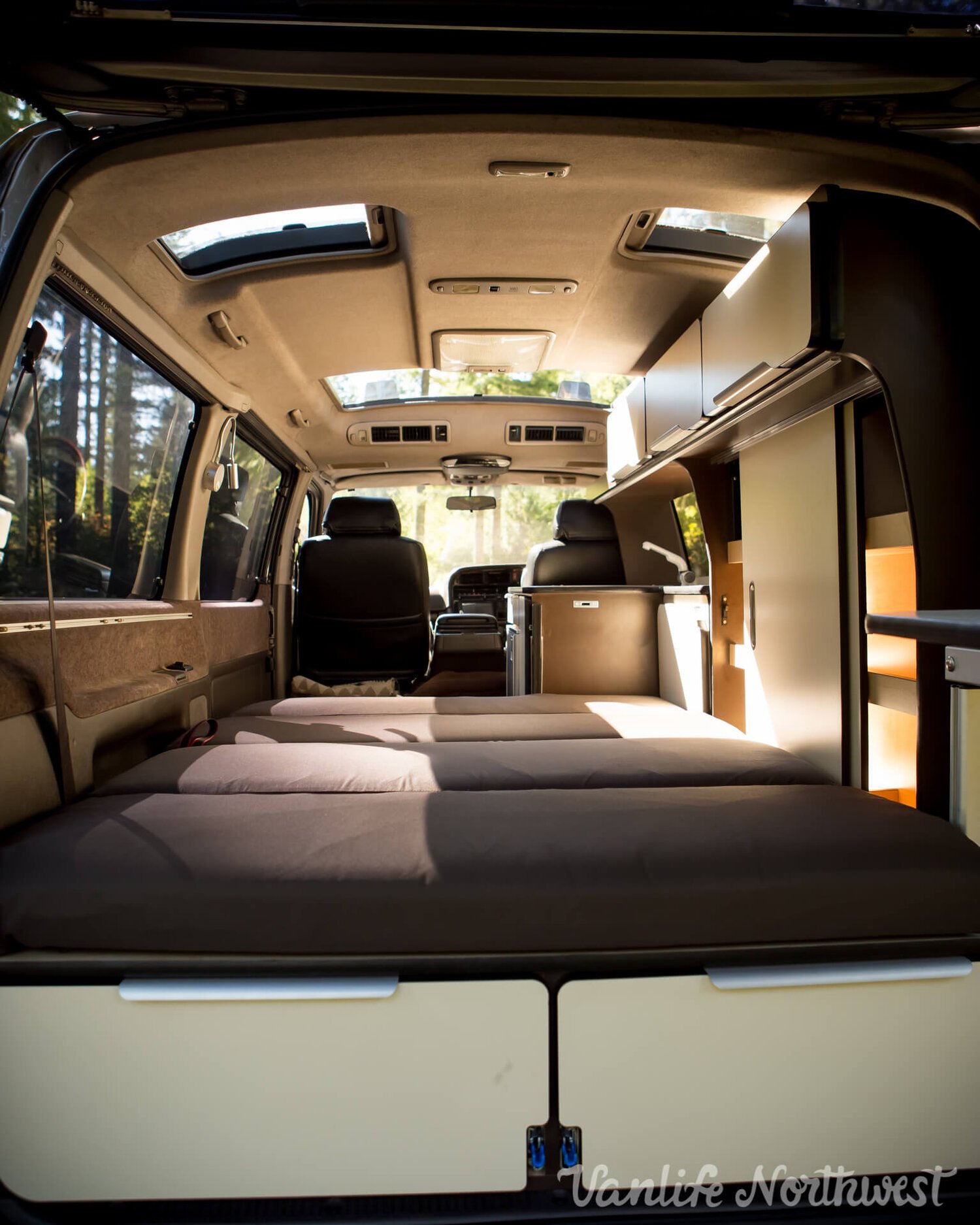
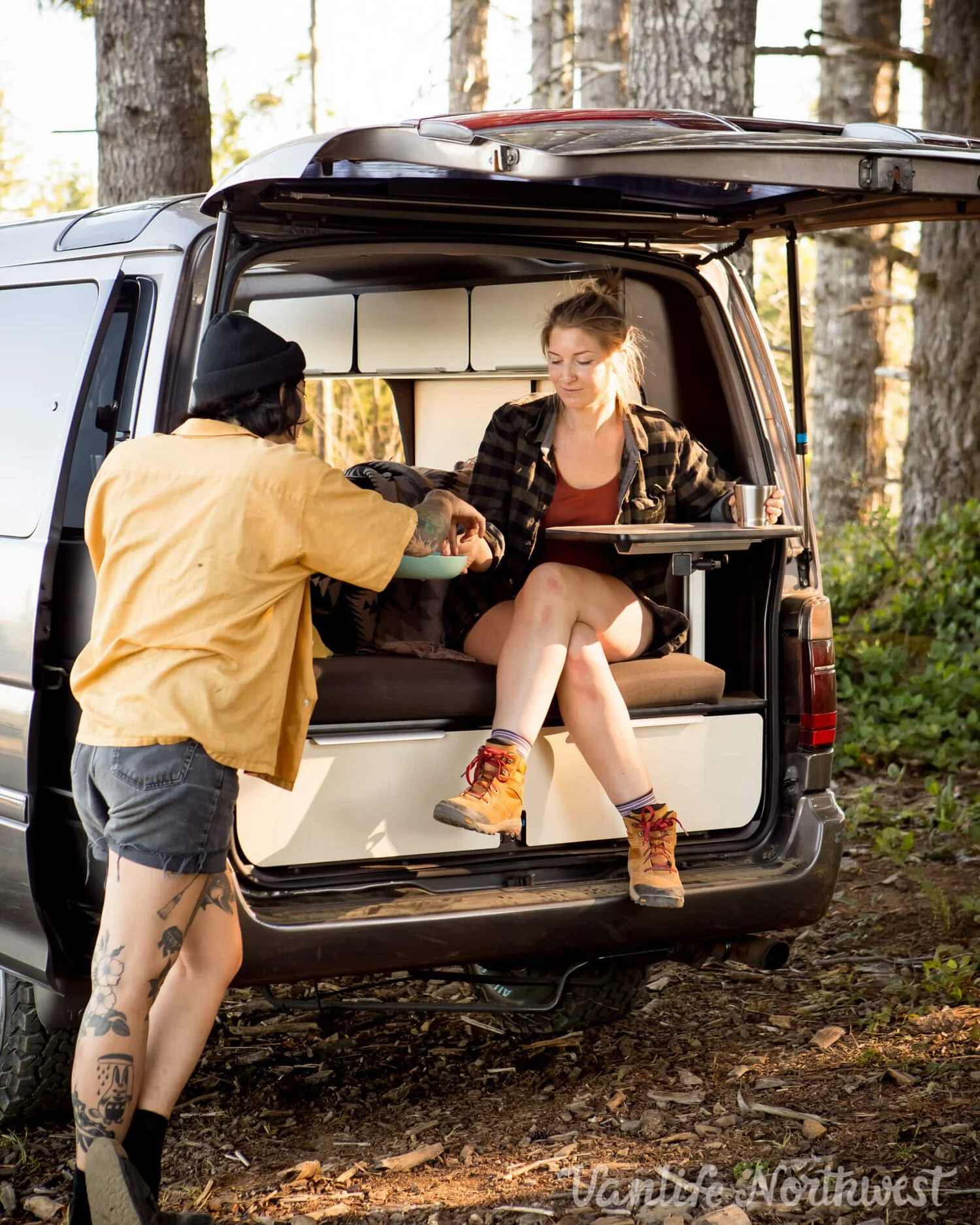
Pictured below is the first official space cabin, not produced by me. Grateful to be apart of this project!
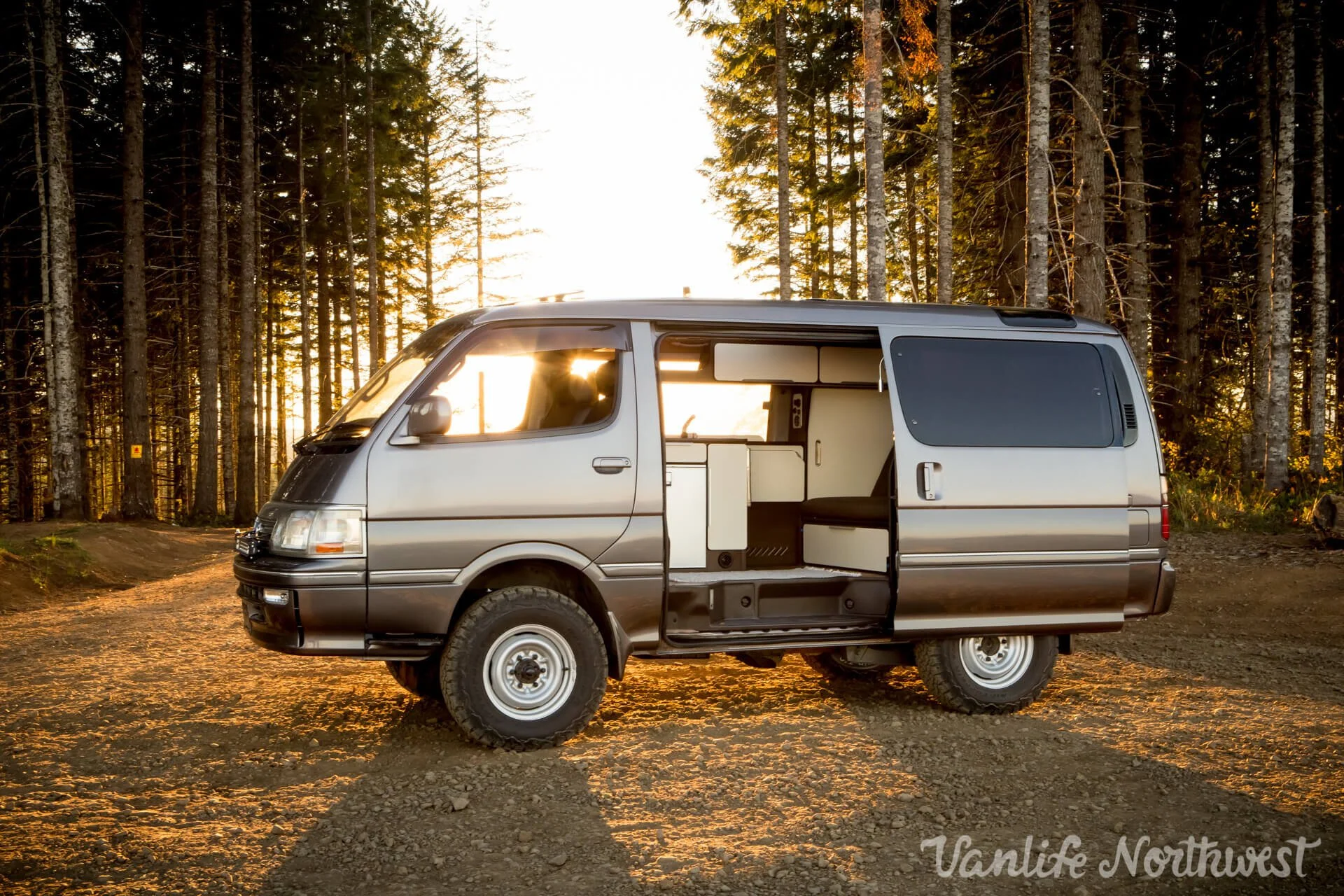
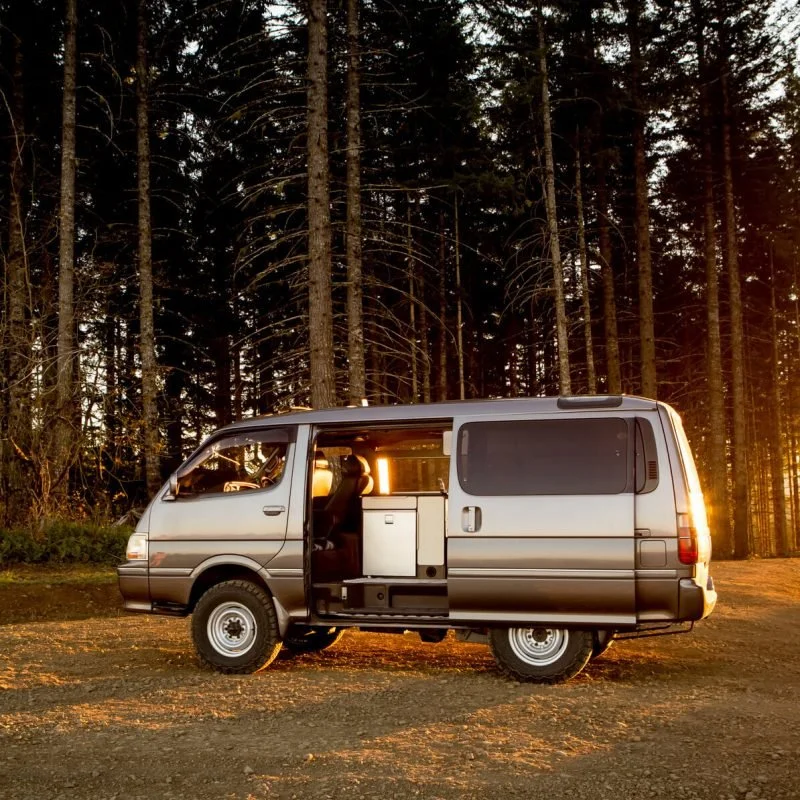
A silver van parked on a dirt path in a forest during sunset, with trees surrounding it and sunlight filtering through the branches.
Silver van parked on dirt ground with an open side door, revealing storage compartments inside, in front of a dense forest at sunset.
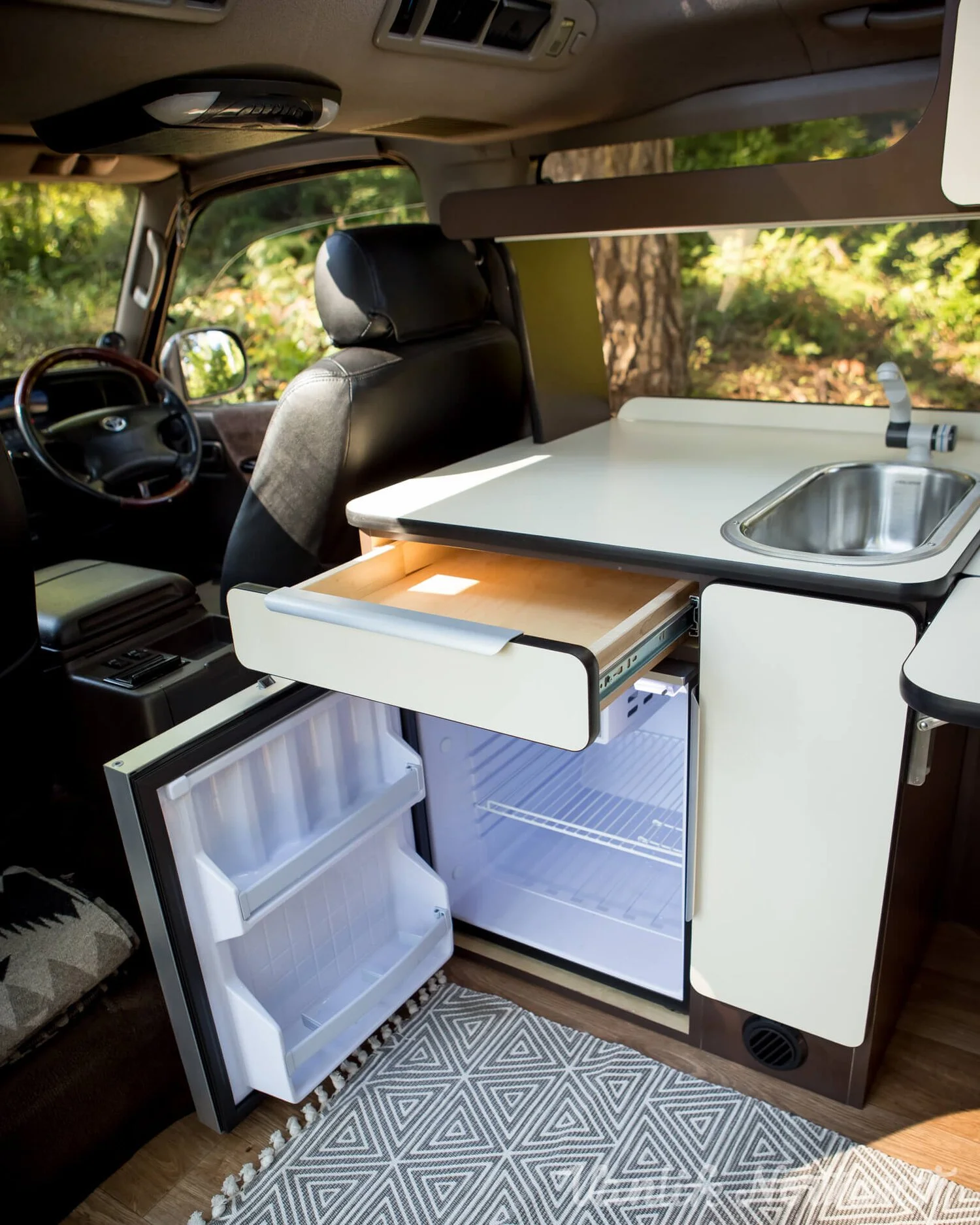
Inside a camper van, showing the kitchen area with a small refrigerator, a sink, and a countertop, with trees visible outside the windows.
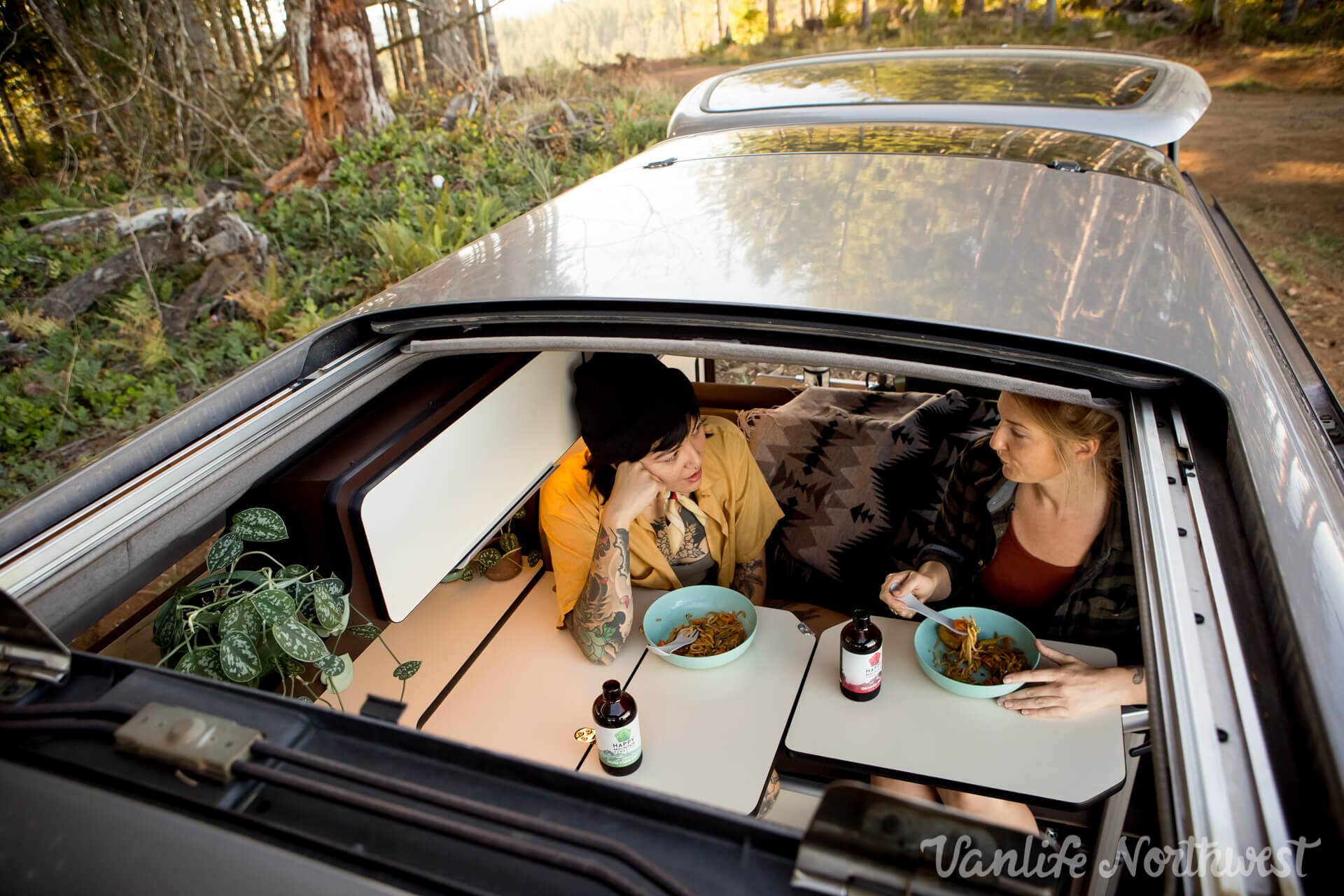
Two women sitting inside a car with the sunroof open, having a meal on a table with bowls of pasta, bottles, and a soda can, surrounded by trees and nature.
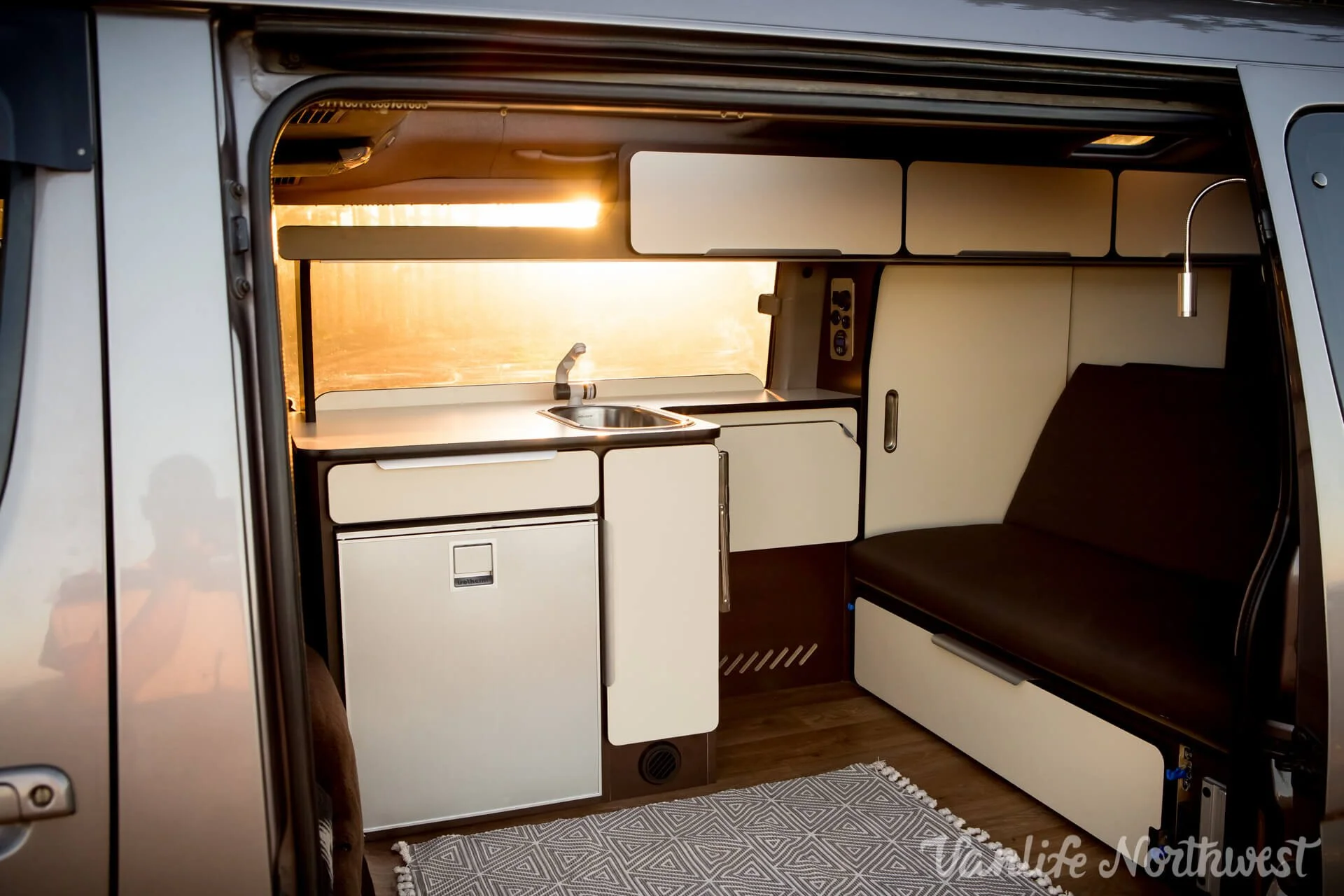
Interior of a compact camper van kitchen with a small sink, cabinets, and seating area, illuminated by warm sunlight.
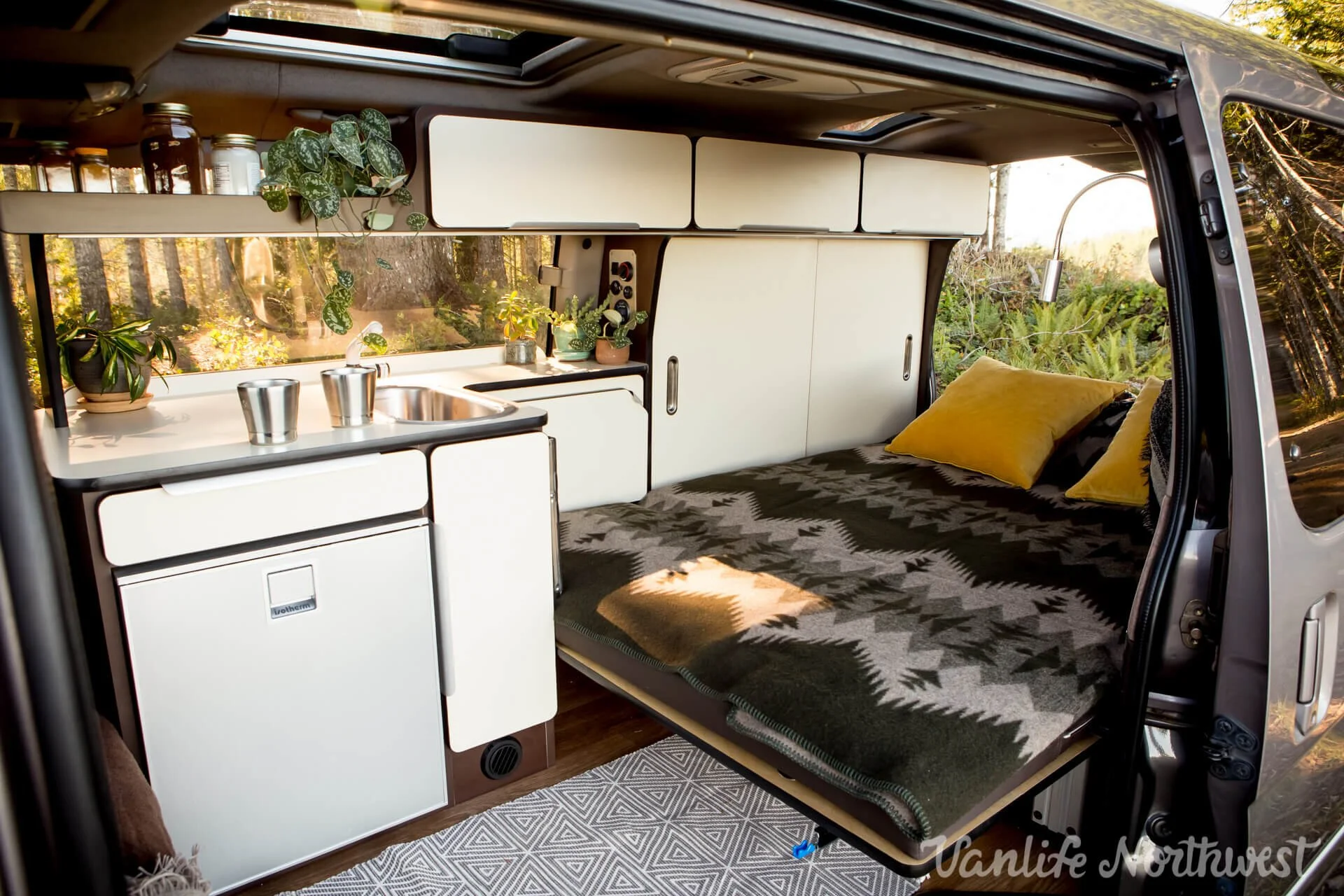
Inside a camper van showing a small kitchen area with a sink, potted plants, and jars, as well as a bed with yellow pillows and a patterned blanket, with sunlight coming through a window and a skylight.
Interior of a vehicle converted into a camper van with storage cabinets, a bed area, and sunlight coming through the windows, surrounded by trees.
The interior of a camper van showing sleeping area with cushions, front seats, and ceiling skylights in daylight.
Two women interacting at the back of a white van in a forest setting, one sitting on the edge of the van's open trunk and the other standing, offering something. The woman sitting is wearing hiking boots, a plaid shirt, and shorts, and has tattoos on her legs. The woman standing is wearing a black beanie, glasses, a yellow jacket, and shorts.